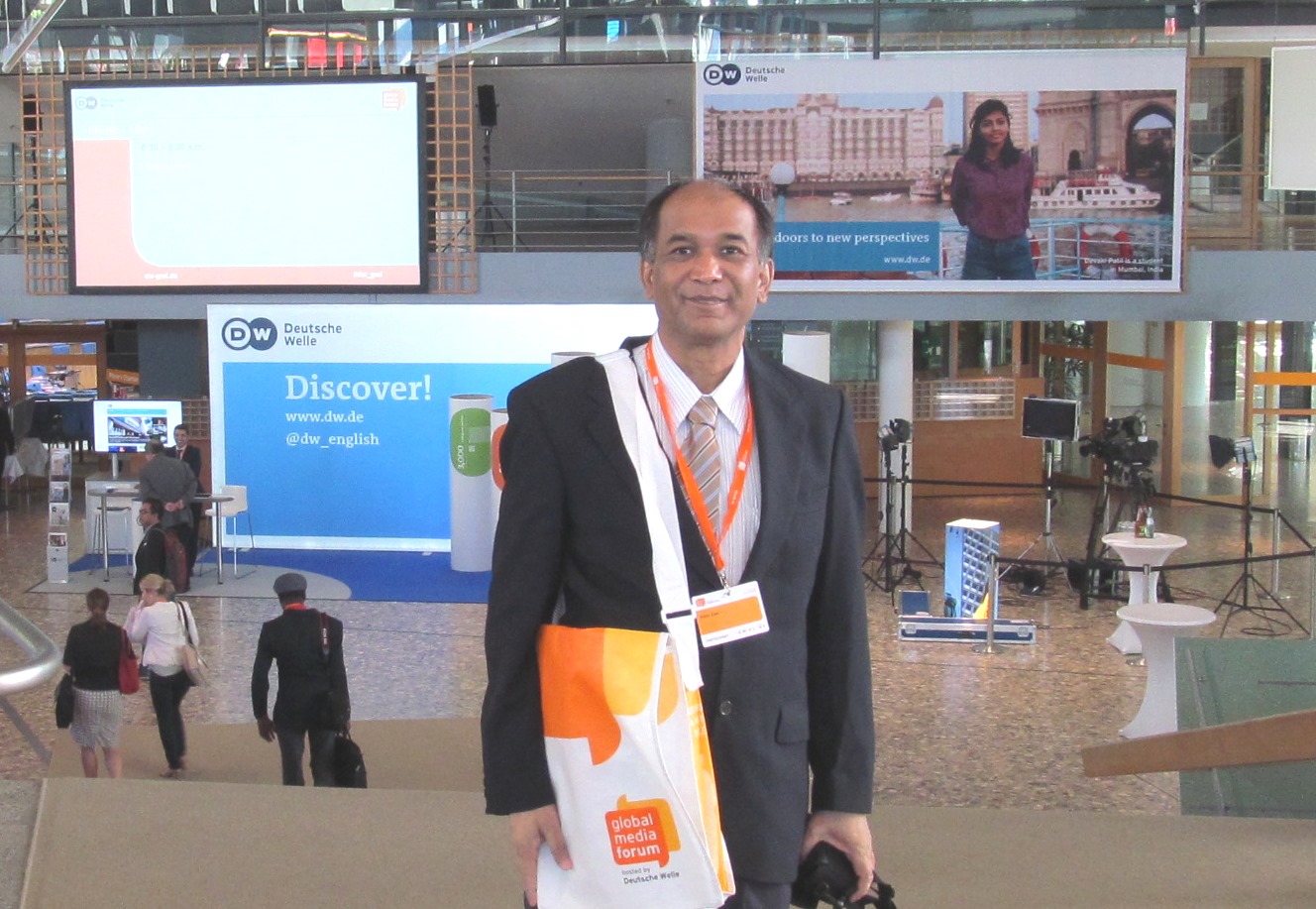
GLOBAL MEDIA FORUM 2014; “FROM INFORMATION TO PARTICIPATION-CHALLENGES FOR THE MEDIA”

GMF WS 1

??????????????????????????????? ???????????????????????????????

Introduction

The Deutsche Welle Global Media Forum is an annual international conference focusing on the establishment of a platform for interdisciplinary exchange and dialogue on the challenges of globalization in which media play a central role. Germany’s Federal Foreign Office is supporting this conference financially and with regards to content provided the basis for a growing international network of experts from more than 100 nations. Take part in this event means inserting a jigsaw piece into the multiple facets of the media world’s dynamic multicultural scenario.

Mission

For me as a published freelance writer for more than 30 years, having small publication house with local language, and an active user of social media from Myanmar, to participate in this crucial event of global media as crossroad experience of the bridging.

Process of Activity
Part (a) Pre-GMF process

Thankfully, I received my invitation letter from Deutsche Welle Media Services in early May, 2014, to attend DW-GMF.
Proceeding to the German Embassy in Yangon, Myanmar for a visa was done and allowed in accordance with necessary documents. After confirmation by me, all the hotel reservation and air-rail e-tickets were came in. Everything was ready for me since middle of June. All the information about GMF and advices about travel, especially for Frankfurt Airport-rail system were sent before my journey.
My journey began from Yangon on Saturday, 28th June, through Bangkok to Frankfurt was smooth. Continued with Rail and reached safely to B&B hotel, Bonn at midnight. I had been crossing a time zone.
BK 1

Part (b) GMF Participation
Sunday, June 29, 2014
Attending the pre-forum coffee party at the Deutsche Welle Centre, meet with cordial welcoming project manager and several enthusiastic participants were coming. Making new friends and exchanged mutual chit chat.

IMG_1612 GMF 5

Monday, June 30, 2014
Registration was convenient with cordial welcoming from receptionist counters, receiving all the necessaries for the forum. Grandness and multicultural inclusiveness of the Forum was evident with numerous honorable guests, experts and participants came from various corners of the world.

IMG_2190

Welcoming remarks of Peter Limbourg, Director General, Deutsche Welle, Germany at opening ceremony and Keynote speech by Thorbjørn Jagland, Secretary General, Council of Europe, Norway, were remarkable with important messages for dynamism of media world.

IMG_1665 IMG_1666

For me the instrumental duo performance of trumpet and cello was very special and also significant for Bonn, the native of Beethoven. After that Brent Goff presented very well with enjoyable guest, Dr. Bassem Youssef, satirist and columnist, host of the El Bernameg satirical news show, Egypt, showing tactful entertainment’s usefulness for encountering with a very tough and challenging situations.

After that there was “Media summit: The future of journalism and the role of international broadcasters” which highlighted the shifting paradigm of media’s digital future by intermingling between bloggers’ commentary and traditional journalistic reporting contents. Keynote speech of Dr. Mathias Döpfner, Chairman and CEO, Axel Springer SE, Germany “A farewell to pessimism: Why journalism benefits from digitalization” gave the hope and ways for next steps.

At the lunch time, meals were appropriate for me and plenty of coffee breaks throughout the program make me freshened.

At the afternoon of the first conference day, there were 6 parallel workshops which make me a bit to consider because all had their attractiveness. Finally I joined to “Quality vs. quantity – How is traditional media responding to the rise of social media?” room which I believe given many ways and means to face the challenges.
After a coffee break, there were another 6 parallel workshops again which I need to make a choice. I had joined to “A blueprint for building communities: Applying community-building practices to a news media company” which was a very interactive one. Thanks for the coordinators for their skill and understanding about human nature in communication and expressing by guiding with theme. I enjoyed a lot there, getting some new friends.

GMF 3 GMF workshop

At the main theatre Dr. Gerd Müller, Federal Minister for Economic Cooperation and Development, Germany gave the speech.

The following program “2014 Bobs Awards Ceremony” was thrilling for me because of the great jobs done by media-persons from the various parts of the world. Congratulations for all award winners who had taken risk doing good not only for the communities they represented, but also stand up as role models. Well deserve for the awards.

0,,17747704_303,00
Then I had joined to the reception at Deutsche Welle

Tuesday, July 1, 2014
Morning program began with a good topic “Global and participatory: Political opinion-making in the digital age”. News and information are more immediate and omnipresent than ever before. How does that affect policy-makers’ actions and individuals’ personal roles in political communications?

Dr. Frank-Walter Steinmeier, Federal Foreign Minister, Germany gave the keynote speech and discussion.

GMF WS 2

In the morning workshops I went to join “ The role of (social) media in promoting and sustaining democratic governance”
After lunch break, there were parallel workshops; I was participated in “the ICT4kids Oscar goes to…: Good practice in engaging children and youth in development” as I believe and hope of the future in the hands of children.

Afternoon Second conference day program was “Transatlantic talk; Disclosure of the United States NSA’s secret surveillance activities has deeply shaken transatlantic relations”.

GMF WS 3

After coffee break, there were workshops.
I had joined to “Digital activism and social change: Views from the winners of the Bobs Awards” as I admired their efforts and want to listen their point of views. I get valuable knowledge and experiences.

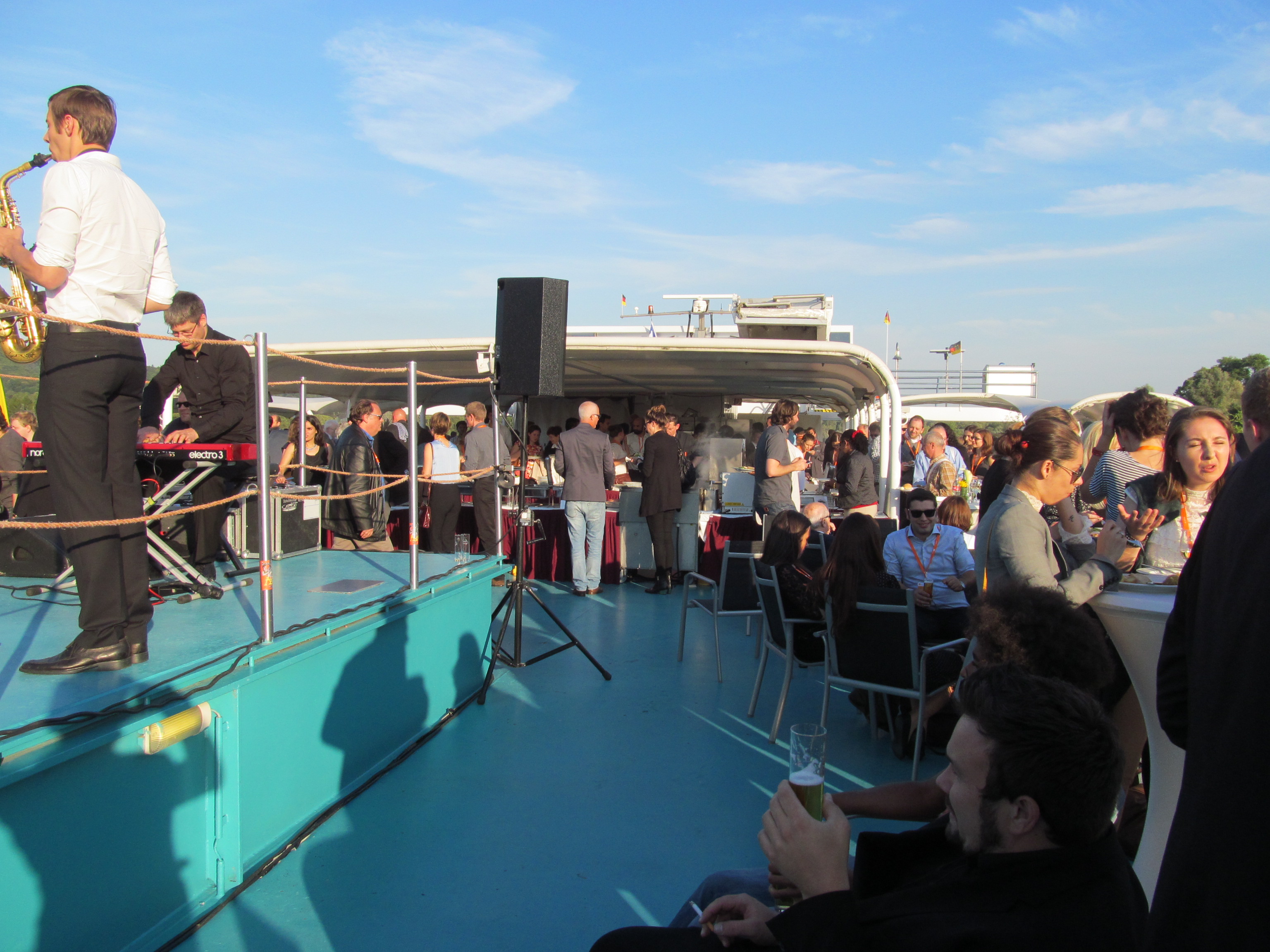
Boat trip and dinner cruising along the Rhine was really relaxing, delightful and unforgettable moment.

GMF Boat 1 ??????????????????????????????? ??????????????????????????????? GMF Boat 4 GMF Boat 5

Wednesday, July 2, 2014
Third day program was started with the keynote speech and discussion by Sarah Harrison, WikiLeaks Journalist. Active and lively discussions were observed. Continued participation and cyber security – friends or foes? Disclosure of the NSA’s global surveillance activities dealt a severe blow to people’s trust in digital society.
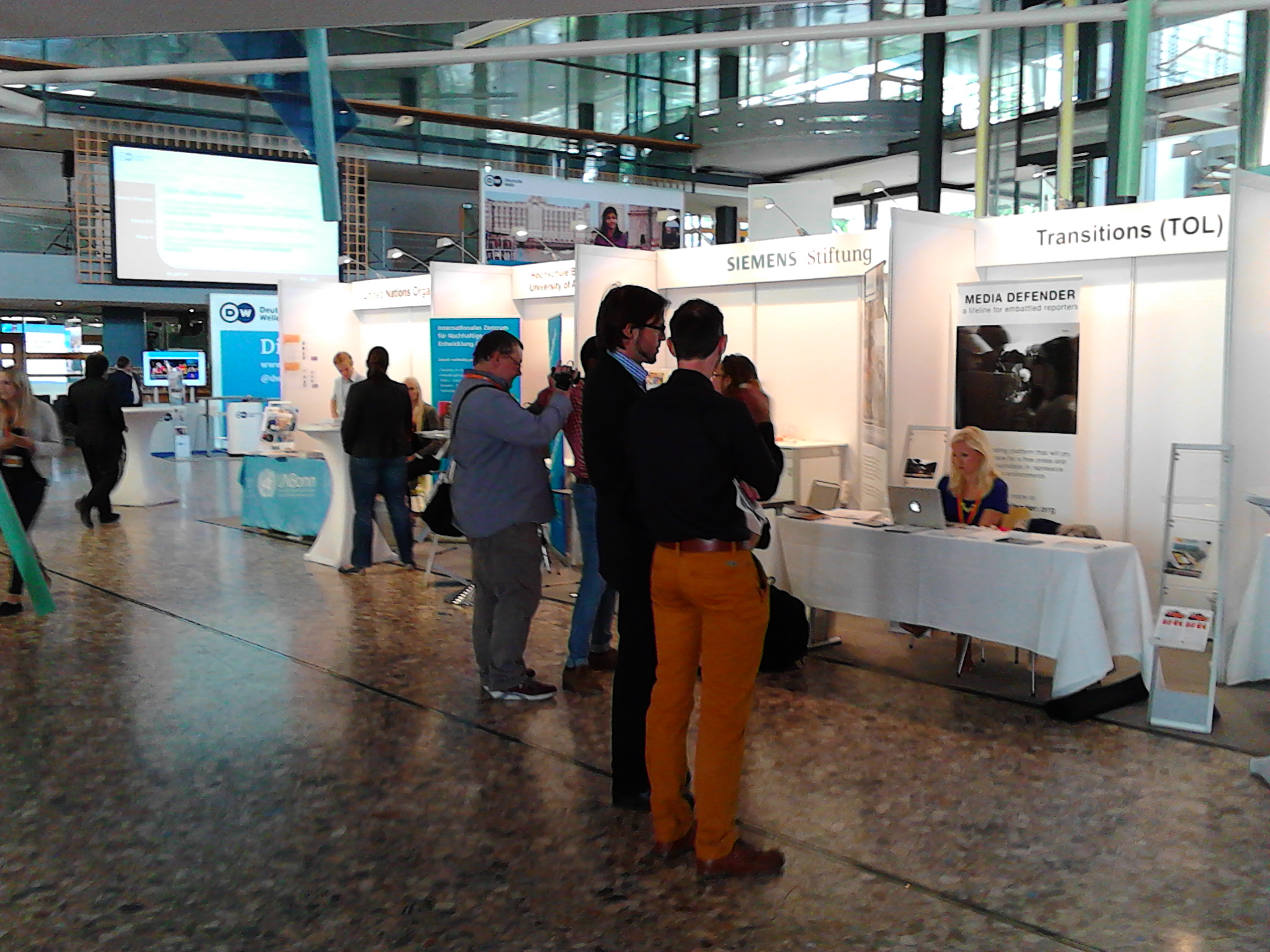
GMF WS 4 GMF WS 5 GMF WS 6
After noon time coffee break there were some workshops. I joined in “Cyber attacks, energy security and terrorism – A NATO perspective on emerging security challenges in the 21st century”.

Closing 1Closing 3

At 1400 hrs there was “Closing ceremony”
Auma Obama, Chair, Sauti Kuu Foundation, Kenya/Germany gave her keynote speech and closing address was given by Peter Limbourg, Director General, Deutsche Welle, Germany. Both speeches contained the message concerned with the stand of global media for the sake of building and protecting humanistic society, individuality in the ever changing media world.

Closing 2

Reception at Deutsche Welle headquarter was hosted by the Mayor of Bonn City. I think we all were honored to enjoy that reception party. Remarkable moment!

Part (c) Post-GMF process
I left Bonn on 3rd July, through Frankfurt and Bangkok, safely reached back to Yangon on 4th July. After GMF I am still in contact, responding questionnaire, getting GMF-photo & blog, writing something in my own social media.

PERSONAL REMARK
I believe that, the mission of GMF was accomplished for this year and hoping to continue. The greatest message I get from GMF 2014 is keep connected for humanity whatever the challenges we have faced. All the events of speech, performances, and workshops were lively and full of enthusiasm. Presentations, debate and discussions, remarks and comments were interactive.
Widening of knowledge, sharing some know-how, and most importantly changing attitude were happened in this GMF. This was not only the meeting of heads but also of hearts.
Epoch making was that more than 2000 representatives with multicultural backgrounds from the different regions gathered here and became connected to each other. I have confidence that the process will eventually going forward as ignition of a fire or growing of a tree.

??????????????????????????????? Bonn 3 Bonn 10 ??????????????????????????????? Bonn 2 ??????????????????????????????? ???????????????????????????????
For my impression, Bonn on the Rhine is an appropriate place to hold this conference, because of convenient space and strong background of historical, cultural, and socio-political significance. I have to note that the summer days also were enchantingly beautiful.

Hope to participate more actively in next GMF.

GMF WS

MY PAINTING GALLERY

Mysterious Smile 45x60 oil on canvas
Mysterious Smile
45×60 oil on canvas
Bronze Age Headless mother goddesses
Bronze Age Headless mother goddesses 45X60 oil on canvas
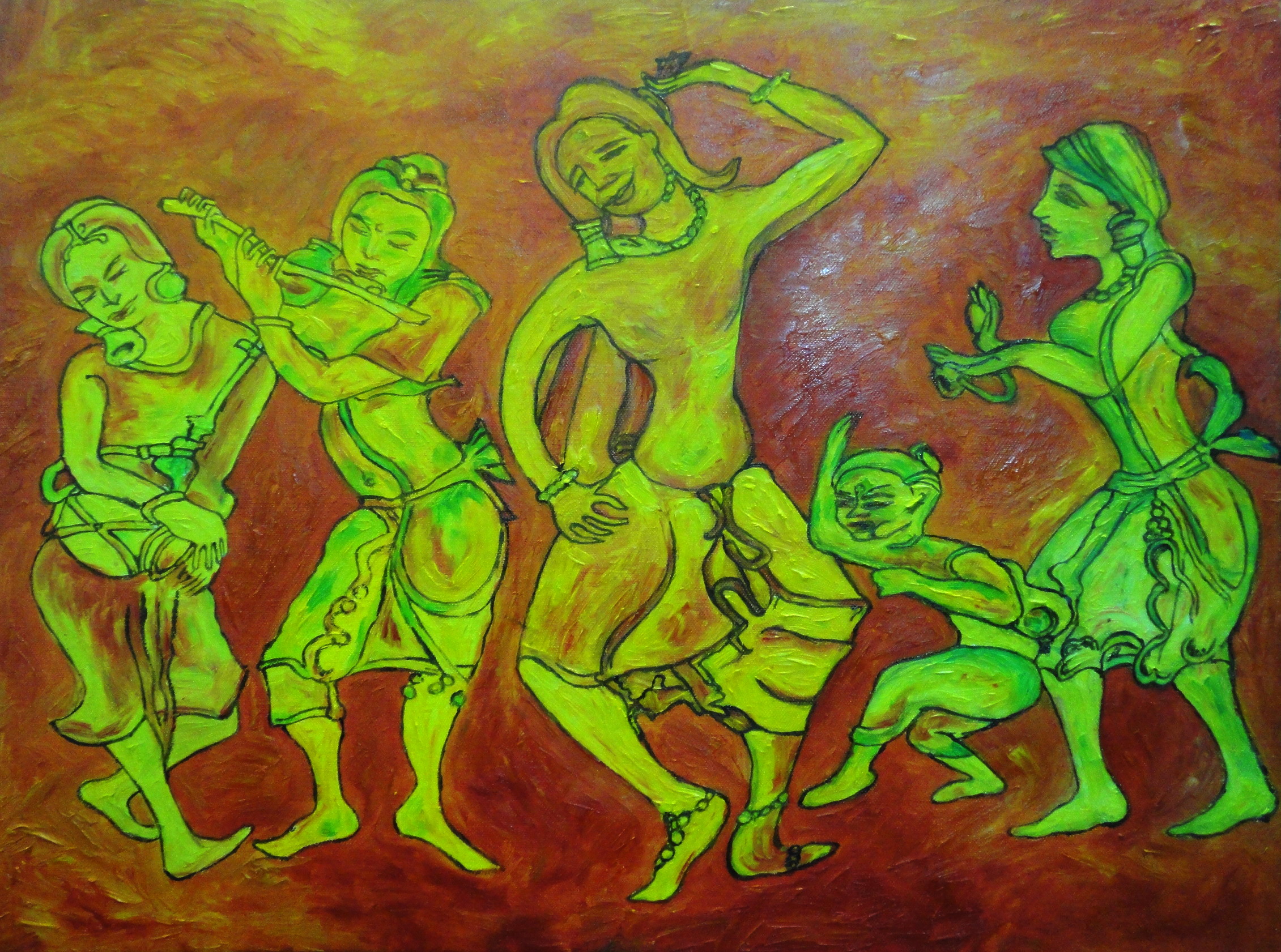
Pyu entertainers 45X60 oil on canvas
Pyu entertainers
45X60 oil on canvas
Transfer of Knowledge 45X60 cm oil on canvas
Transfer of Knowledge
45X60 cm oil on canvas
Ink on paper
Spiked Running Shoes: Ink on paper
45X60 cm Oil on canvas
Risus Sardonicus 45X60 cm
Oil on canvas
45X30 cm Oil on canvas
A Smile 45X30 cm Oil on canvas
Heaven's Ladder
Heaven’s Ladder 45X30 cm oil on canvas 2008
River Ayarwaddy 45X30 cm oil on canvas 2008
The Red Birds of the Snow Mountains 45X30 cm oil on canvas 2008
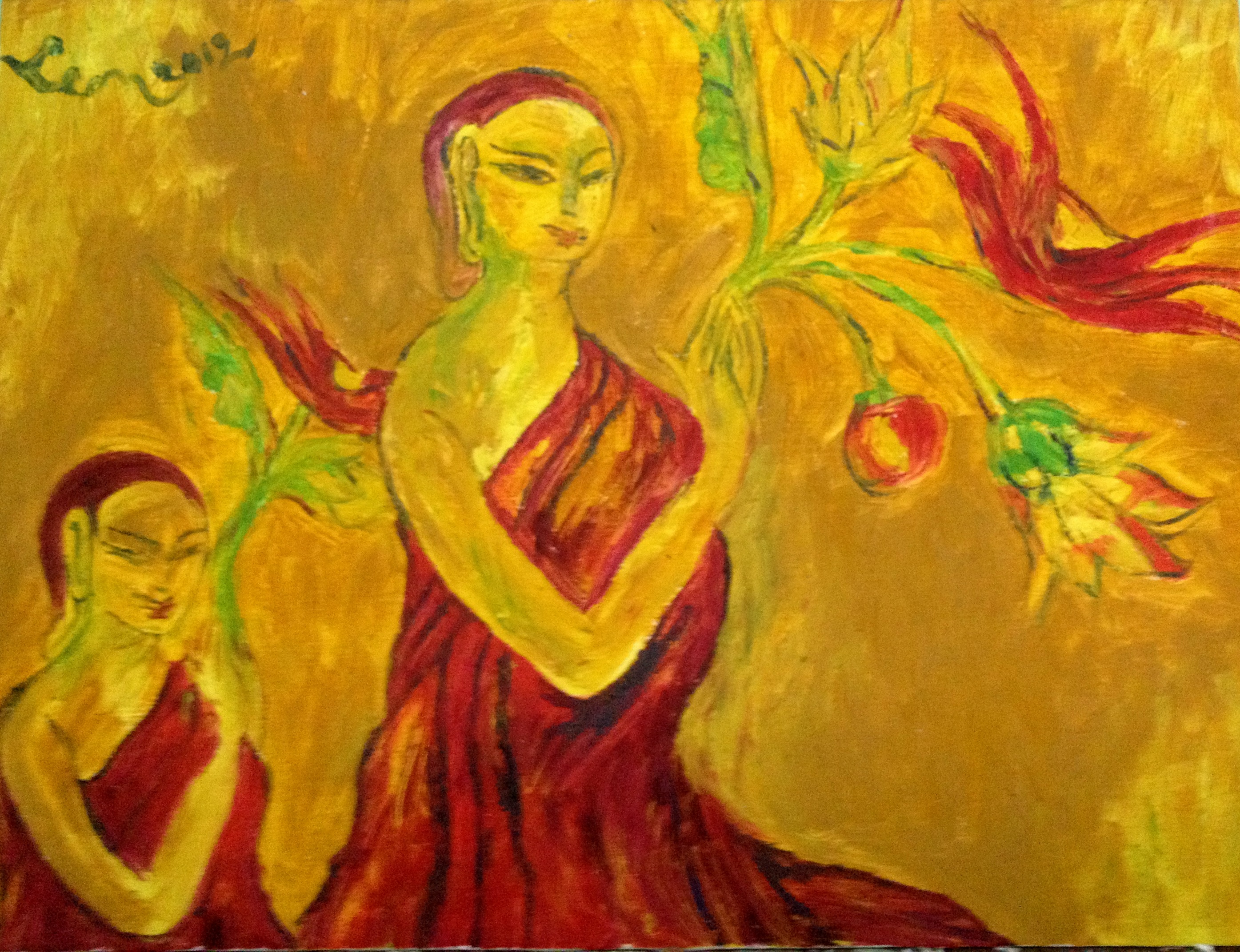
Offering with Flowers 60X45 cm oil on canvas 2012
A Holy Saint 60X45 cm oil on canvas 2012
Green Mother Goddess of Mount Popa 60X45 cm oil on canvas 2012
Two Deities: Son is one month older than his father 60X45 cm oil on canvas 2012
Lord Buddha 60X45 cm oil on canvas 2012

SRIVATSA (THIRIWITTSA) PUBLICATION, YANGON, MYANMAR

OPENING RELEASE

Established since 1995, May.

Cover

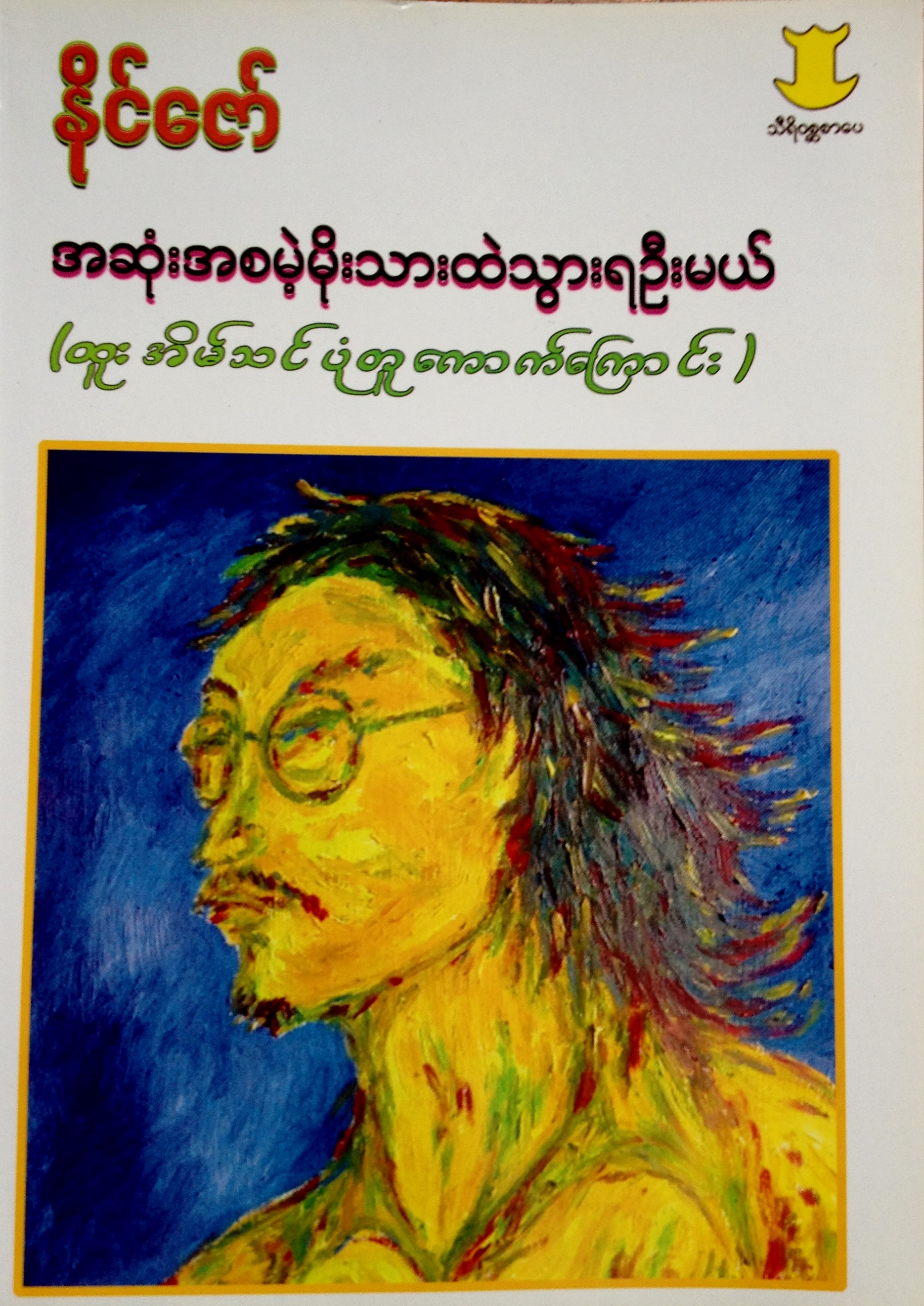
Ah Lo Khat Thane Pyee Nyein Zay Thu Alin Thakin (Lord of the Light: Who fulfilled all wishes)

Novel by Naing Zaw Story of Prince Siddhartha in 5 parts.

a) the light is actually sweet; episode of birth

b) crown of power & turban of glory, episode of royal ploughing ceremony

c) stretch the great arm toward the endless sky; episode of showing archery skill and marriage

d) when eggshell cracked, episode of seeing four signs, aging, disease, death, and hermit

e) beyond the river Anawma; episode of departure from palace to the recluse and holy venture.

A PRIDE OF THE PUBLICATION HOUSE

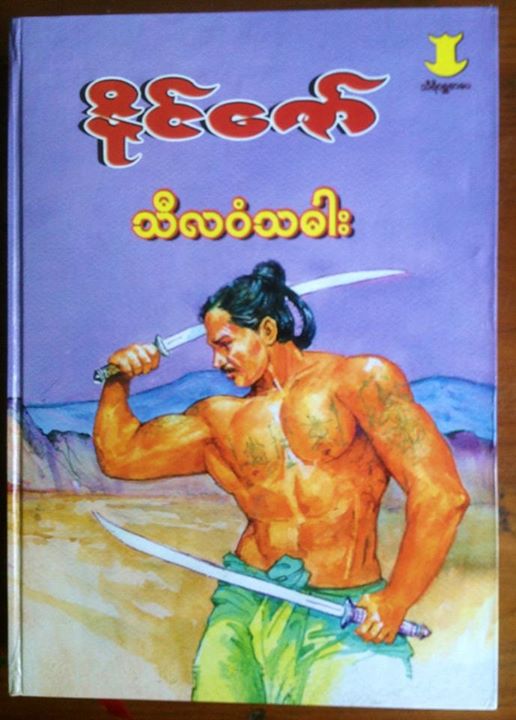
The Sword of Silavamsa

“Silavamsa Dah” (The Sword of Virtuous Descendants) by Naing Zaw was winning Myanmar National Literature Awards 2013 as best novel. Myanmar National Literature Awards which have been presented since 1960s. They are for the best literary works published in the previous year in each category as determined by a selection committee “Palace of Literature”, with an objective to promote Myanmar National literature. “Silavamsa Dah” was a historical novel, covered the 2nd Anglo-Burmese War (1851-53) with numerous characters both the real and fictionalized, complicated narrative in various places with the events of the peace and war, courage and cowardice, love and hatred, happiness and sufferings.

Backdrops Time: from 1851-1853 Space: from Amarapura (Myanmar’s capital in that time) through Rangoon, Mawlamyine, Pegu, Prome, Da-Nu-Phyu to Culcutta (Capital of India under East India Company and  British Raj). Culture, nature, visions, sounds, colours and fragrances of environment anf people.

Characters the reals; Main; Bo Myat Htun- great patriotic leader, Prince Maung Kyauk Lone-king’s brother in law, U Shwe Bwint- Vicount of Zalun,

Supportives; King Bagan, Prince Mindon, Prince Kanaung, Princess Sakkadevi, Amarapura Mayor Bai-sahib, Clerk Maung Bein, Lord Dalhousie, Commodore Lambert, Captain Latter, Sit-Kae Maung Htau Lay

the fictionalized: Main; Ko Aung Thar-a man of loyalty and bravery Maung Shwe Yae-Jewel merchant came back to Myanmar from abroad Ma Mya Thwe- daughter of Bo Myat Htun Ma Mya Yee- wife of Ko Aung Thar Maung Kyaw Shin-Young man with enthusiasm U Mahn Maung Gyi-a shadow like man moving here and there

Another pride of the house

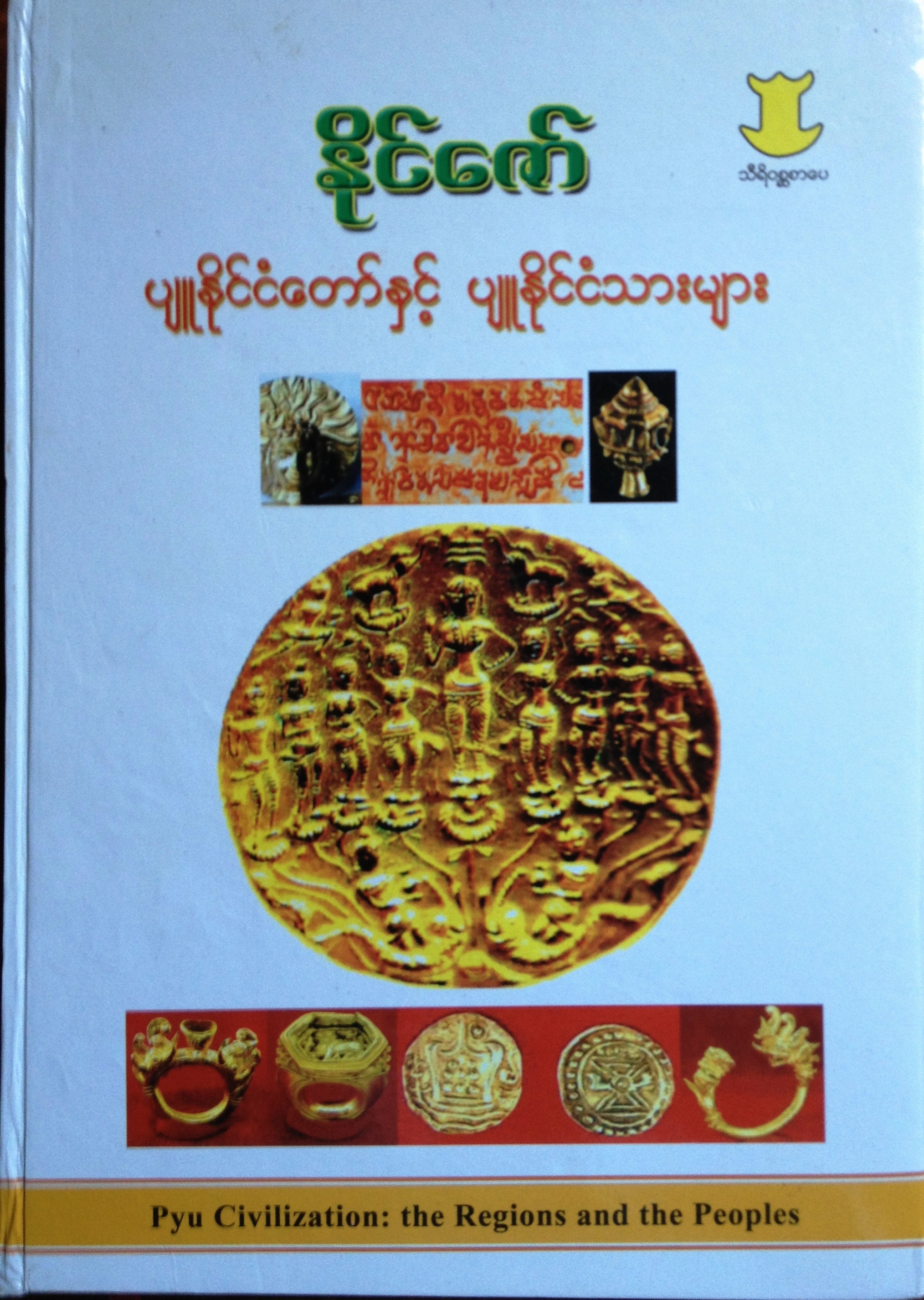
IMG_1710

Historical Records of Pyu Civilization: 15 Chapters: 626 pages, 27×19 cm, 2011

Some books of Naing Zaw published by Srivatsa

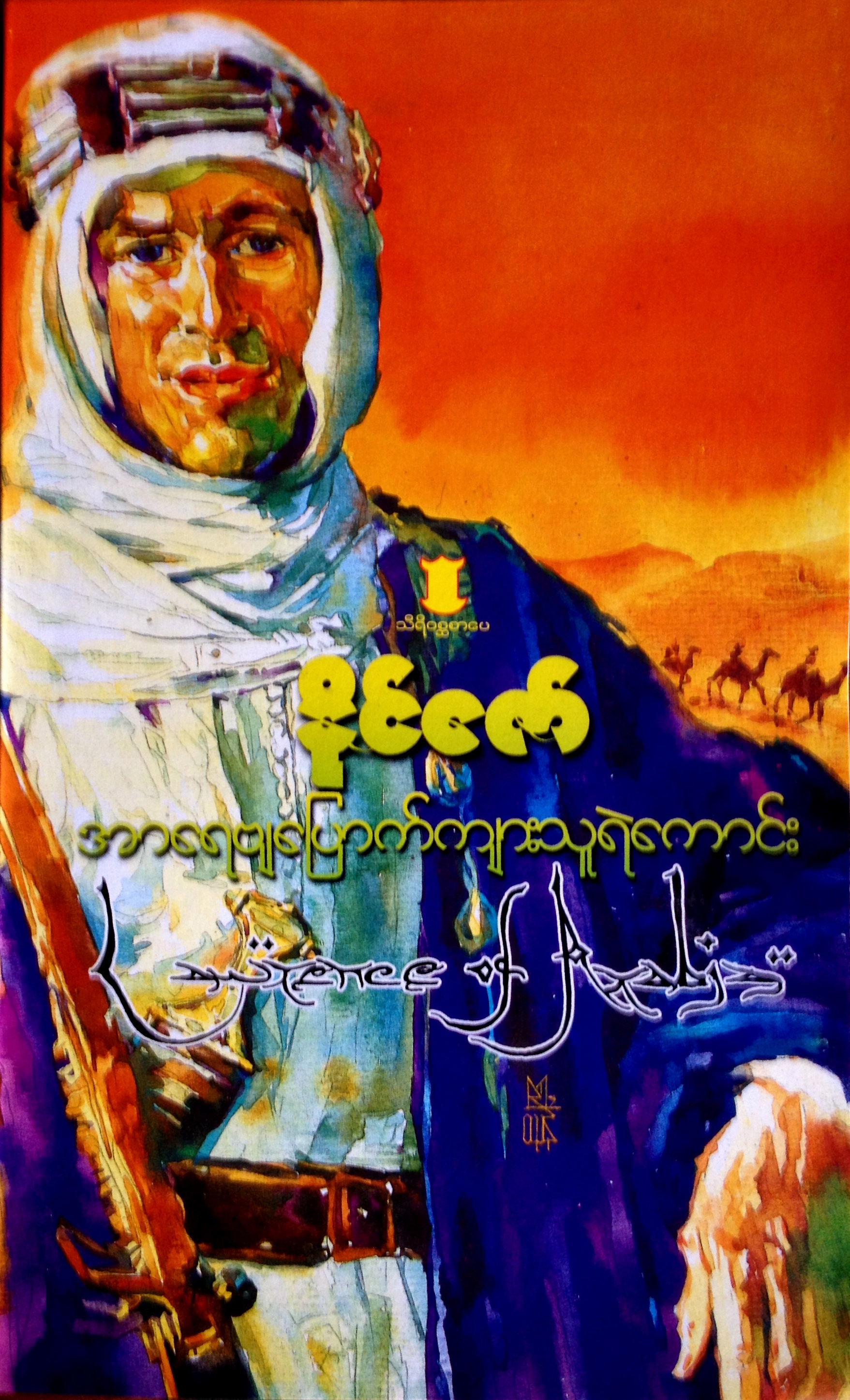
IMG_0751  IMG_0750  IMG_0752 Krisnamurti

Zhi Va Go Gabyar Myar (Zhivago Poems by Boris Pasternak) translation from English (1995 November) Poems of Russian great writer

Taras Bulba (Taras Bulba by Nikolai Gogol) translation from English version (2003) Romantic adventure of Cossacks by Russian Great Writer

Arabia’s Guerilla Warrior (2005) Life and adventures of T. E Lawrence a.k.a “Lawrence of Arabia”

Izzatta Atwin Su Site Chin (Meditations by Krisnamurti) translation from English (1996, 2002) Preachings in prose poem form by Great Indian Master

Front

တန္ခိုးရွိန္ေစာ္ အာႏုေဘာ္
It is a translation of “The Power and the Glory” by British author Graham Greene, a story based on the time during a vicious persecution of the clergies in Mexico. A worldly ‘whisky priest’ is on the run, with the idealist police closing in, his routes of escape are being shut off, his chances getting fewer. But compassion and humanity force him along the road to his destiny, reluctant to abandon those who need him, and those he cares for.
Gratified for the all efforts of translating this remarkable book, which first published in 1940. After 75 years, indeed a Diamond Jubilee, it comes up in Myanmar (Burmese) version from “Srivatsa Publication”.

IMG_0949

Biographical Sketches of Myanmar Singer, Composer, Musician late Htoo-Aein-Thin IMG_1705

Naung-Tar-Lau: Fictional novel based on the true story of “Battle of Myitkyiina” WWII

Shambhala  Crown  IMG_1708

In Search of Mythical Utopia

Casting the Crown of Art: history of art from prehistoric time to 21st Century (Awarded Htan-Yeik-Nyo U Myo Khin Literature prize,

2010 Biographical sketches of an altruistic midwife of remote area

IMG_1706

Background personalities of 6 famous leaders

3 Poem books by Naing Zaw from Srivatsa

IMG_0749  IMG_0748 IMG_0747

The Earth (2009), The Water (2010), The Air (2011)

THREE BOOKS OF MEDICAL ETHICS WITHIN A DECADE
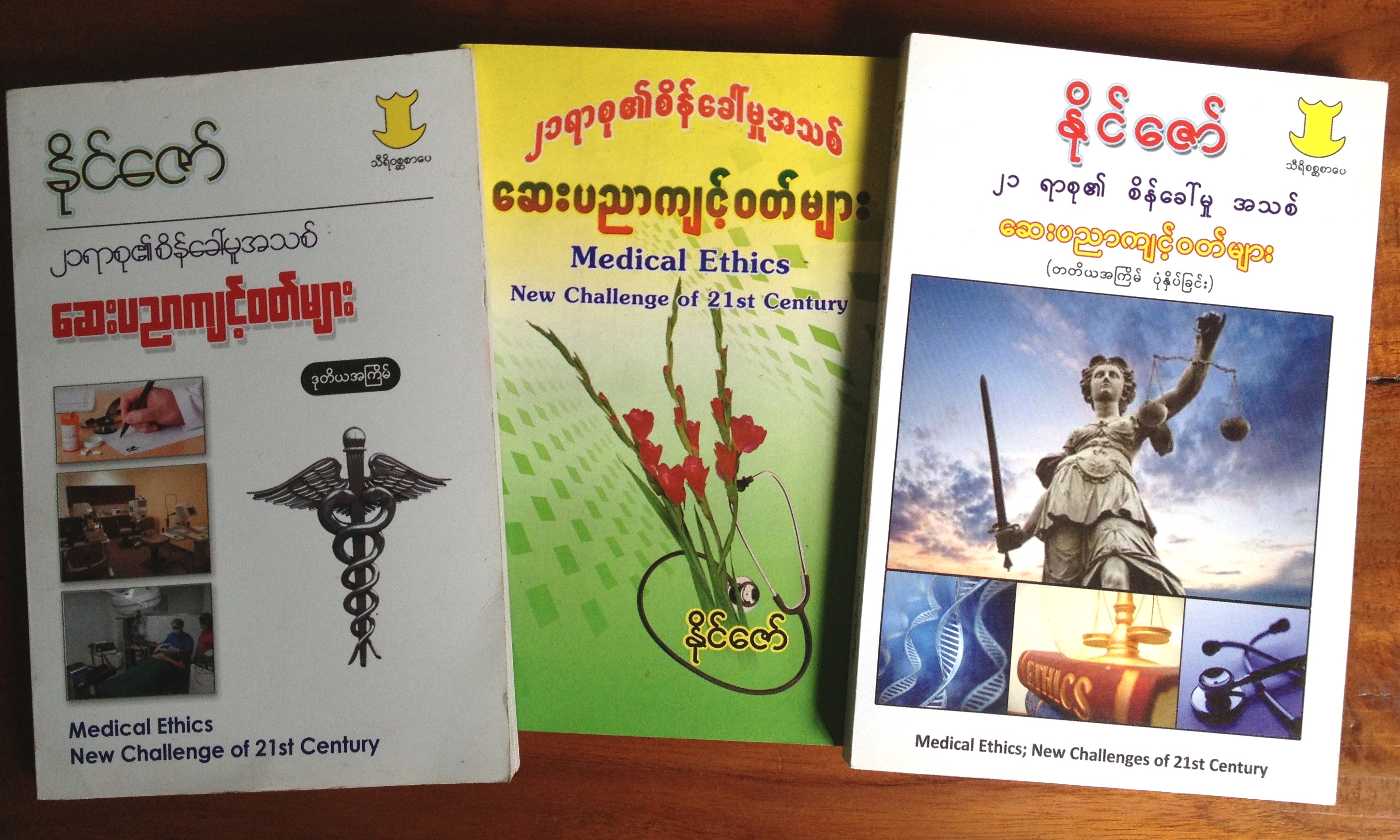
Some articles on medical ethics, in Burmese, were compiled in the first book of this series, “Medical Ethics: New Challenge of 21st Century”, published in 2006. It was reprinted in 2010 and again in 2012. Contents covered the Background of Ethics and Medical Ethics, New definition of death, and issues of the beginning of life, questions of genetic studies, cloning, misconducts, organ transplantations, etc.
IMG_1120
(Awarded Dr Tin Shwe Literature Prize, 2006) 
Second was “Medical Ethics and Professionalism” published in 2012. Topics began with defining healthcare and professionalism and followed by “the emblem of medical profession” broadly describing the comprehensive meanings of so called Aescalpian Rod (one snake) and Caduceus (2 snakes). Other chapters were New Hippocratic Oath: A Charter on Medical Professionalism in the New Millennium, Studying the Medical Ethics, Goodwill Vs. Money, Humanism in care practice, Altruism and medical treatments, Utilitarianism, Healthcare in accordance with Buddhism, and Medical ethics in Pluralistic society.
IMG_1121
In 2014 September,  3rd book of this series “Good Healthcare Practice and Medical Ethics” with Patient’s Basic Rights and Responsibilities, Patient Safety, Relationship between Healthcare Providers and Seekers, Best Care Practice, finally turned out into the hands of readers.
GMP ME
Spiked running shoes and collected short stories (သံဆူးဖိနပ္ႏွင့္ အျခား ၀တၳဳတိုမ်ား)

This is Naing Zaw’s 35th book, “Collected Short Stories”, published before concluding 2014.

Altogether 11 stories are selected: 1/ Affection with land, water, mountains and forests (ေရေျမေတာင္ေတာ သံေယာဇဥ္) 2/ Lotus, Fire, Triangle ျကာပန္း၊ မီးလွ်ံ၊ တရိဂံ) 3/ A Withered Leaf of an Old Dream (အိပ္မက္ေဟာင္း၏ သစ္ရြက္ႏြမ္း) 4/ Peach Blossoms (မက္မြန္ပြင့္မ်ား) 5/ Black and White 69 (အျဖ ူ အမည္း ၆၉) 6/ Praying Rose (ဆုေတာင္း ႏွင္းဆီ) 7/ Spiked Running Shoes (သံဆူးဖိနပ္) 8/ Jungle of Magical Illusions (ေမွာ္ရံုေတာ) 9/ Warmly Impelled Flow (ပူေႏြးစြာ တိုးေ၀ွ ့စီးဆင္း) 10/ Bird (ငွက္) 11/ Sharp Claws of the River (ျမစ္၏ လက္သည္းခြ်န္)

These are some of the yields through my 4 decades long writing career.

Spiked Cover

Three books of Child caring and raring by Professor Kay Thi Htun
IMG_1704  IMG_1703  IMG_1702

MAHABODHI-MANDALA

GATEWAY TO BODHIMANDALA

One early April morning, 2014, through the Yangon International Airport, Myanmar, I had began my pilgrimage to Bodhgaya, India, which is a sacred place for all Buddhists.

Bodh Gaya is one of the 4 holiest places of Buddhist pilgrimage because Lord Buddha had enlightened there. Others being Lumbini (Birth), Sarnath (first Sermon), and Kushinagar (Mahaprinirvana).

Mahabodhi Temple Complex, which became a UNESCO World Heritage Site in 2002, is situated in Gaya district, Bihar State, India.

Four Additional Sites: Sravasti • Rajgir, Sankissa • Vaishali
Other Sites: Pataliputra • Gaya • Kosambi, Kapilavastu • Devadaha, Kesariya • Pava, Nalanda • Varanasi

Gaya 1

Gaya city have ancient historical and mythological significances.
Surrounded by rocky hills by three sides and the river Phalgu (Niranjara) flowing on the fourth (eastern) side, it is sanctified by Buddhists, Hindus and the Jains.

About 11 km from Gaya city is Bodh Gaya, where Lord Buddha attained enlightenment.
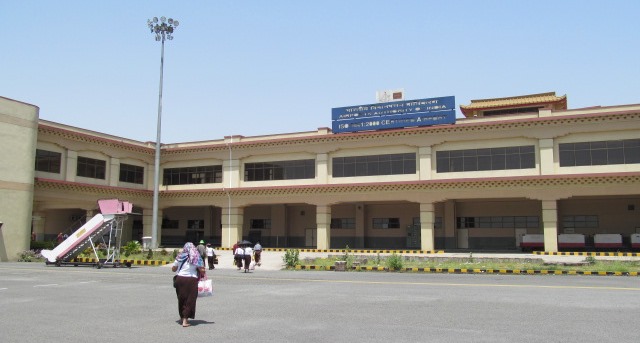
Gaya International Airport is situated between Gaya city (7 km) and Bodh Gaya (11 km).

Gaya Airport Beginning of the Long Journey

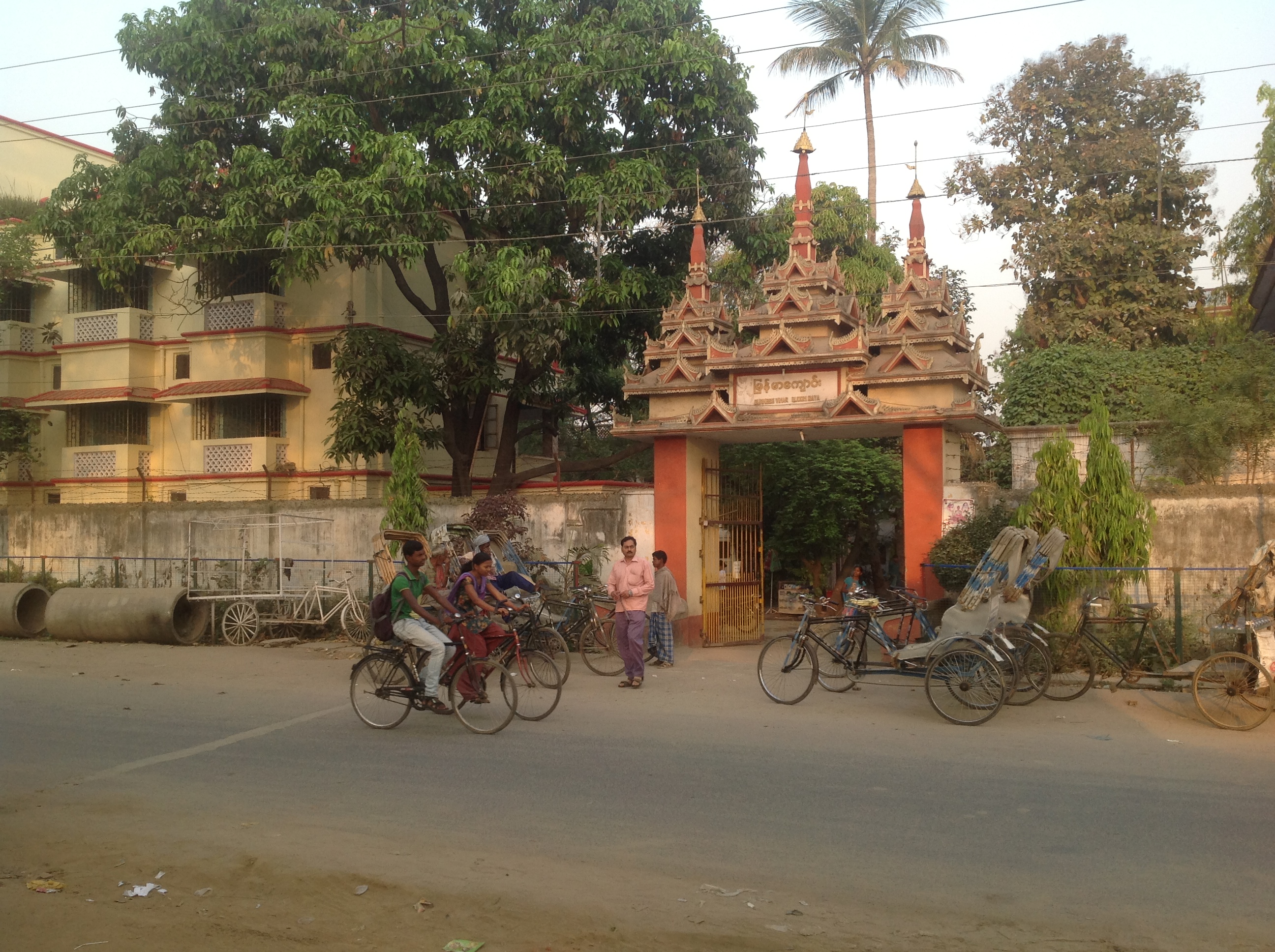
Myanmar Monastery in Bodhgaya, where I stayed is just 15 min convenient walk far to Mahabodhi Temple Complex, passing busy colourful market street

Myanmar Vihara, Bodhgaya  Way to Great Temple 7 Way to Great Temple 3 Way to Great Temple 4

MAHABODHI-MANDALA
As per Buddhist Jatakas, it is the axis navel of “the Earth” and central point of all sacred energies, since no other place can support the weight of the Buddha’s attainment.
Buddhist mythology claimed that the Bodhi-mandala is the first spot to appear when the world emerges into existence. Lotuses will bloom in accordance with the number of Buddhas expected to arise. In our age 5 lotuses were bloomed. According to legend of Lord Gautama Buddha, a Bodhi tree sprang up on the day he was born.
When the world is destroyed at the end of a kalpa, the Bodhi-mandala is the last place to disappear
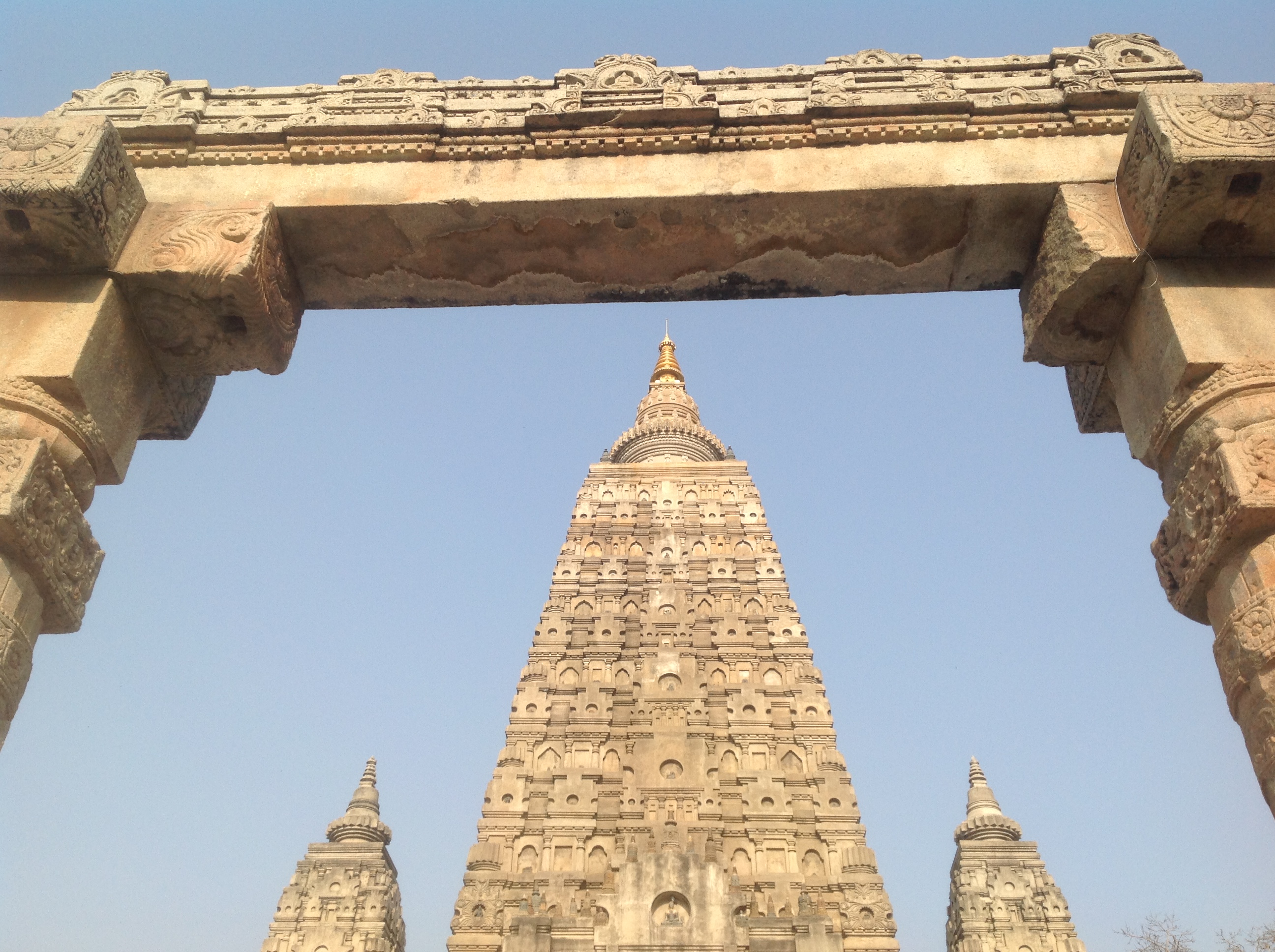
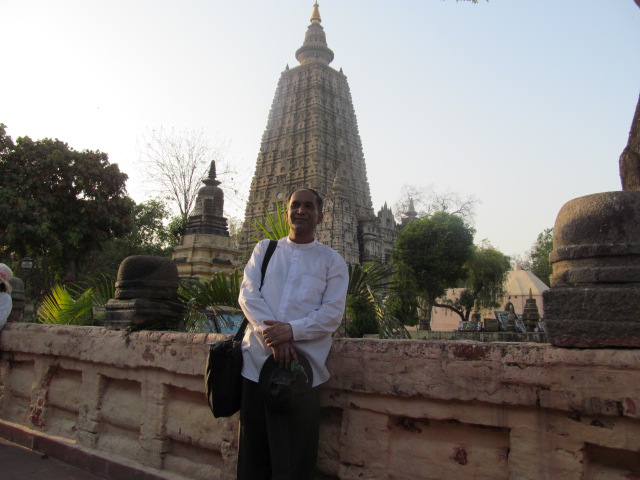
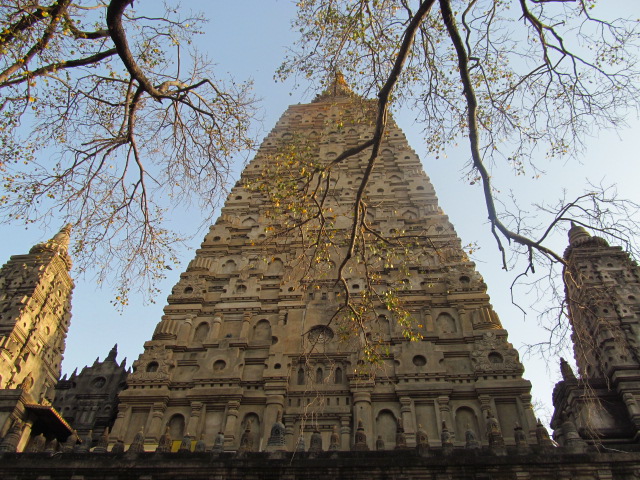
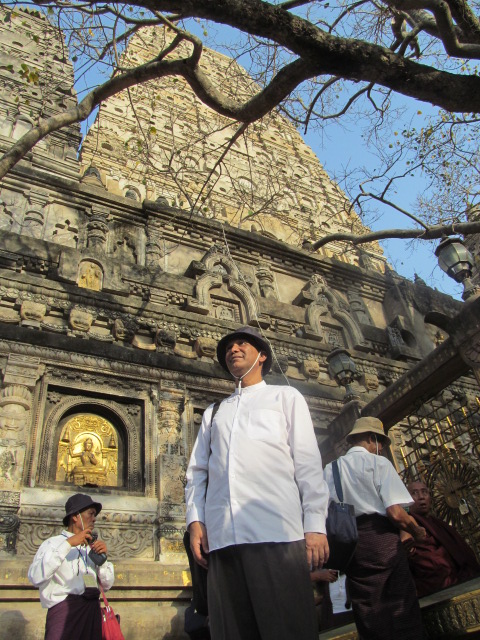
Mahabodhimanda Vihara “Great Awakening Temple” marking the location where the Lord Buddha attained enlightenment. On its western side, is the holy Bodhi tree.

Mahabodhi Temple and Bodhi treeMahabodhi

SEVEN SACRED PLACES WITHIN THE MAHABODHI-MANDALA
Becoming enlightened Lord Buddha spent total seven weeks (49 days) at seven different spots in the vicinity meditating and considering his experiences.
(1) Diamond Throne; the Main Temple and Bodhi tree
Mahabodhi Temple and Mahabodhi Tree
(2) Standing and stared, uninterrupted at the Bodhi tree
Unblinking Stupa
(3) Walked back and forth between unblinking hillock and Bodhi tree, Great Corridor 
Great Corridor
(4) abode in the house of jewel
House of Jewel House of Jewel Interior View
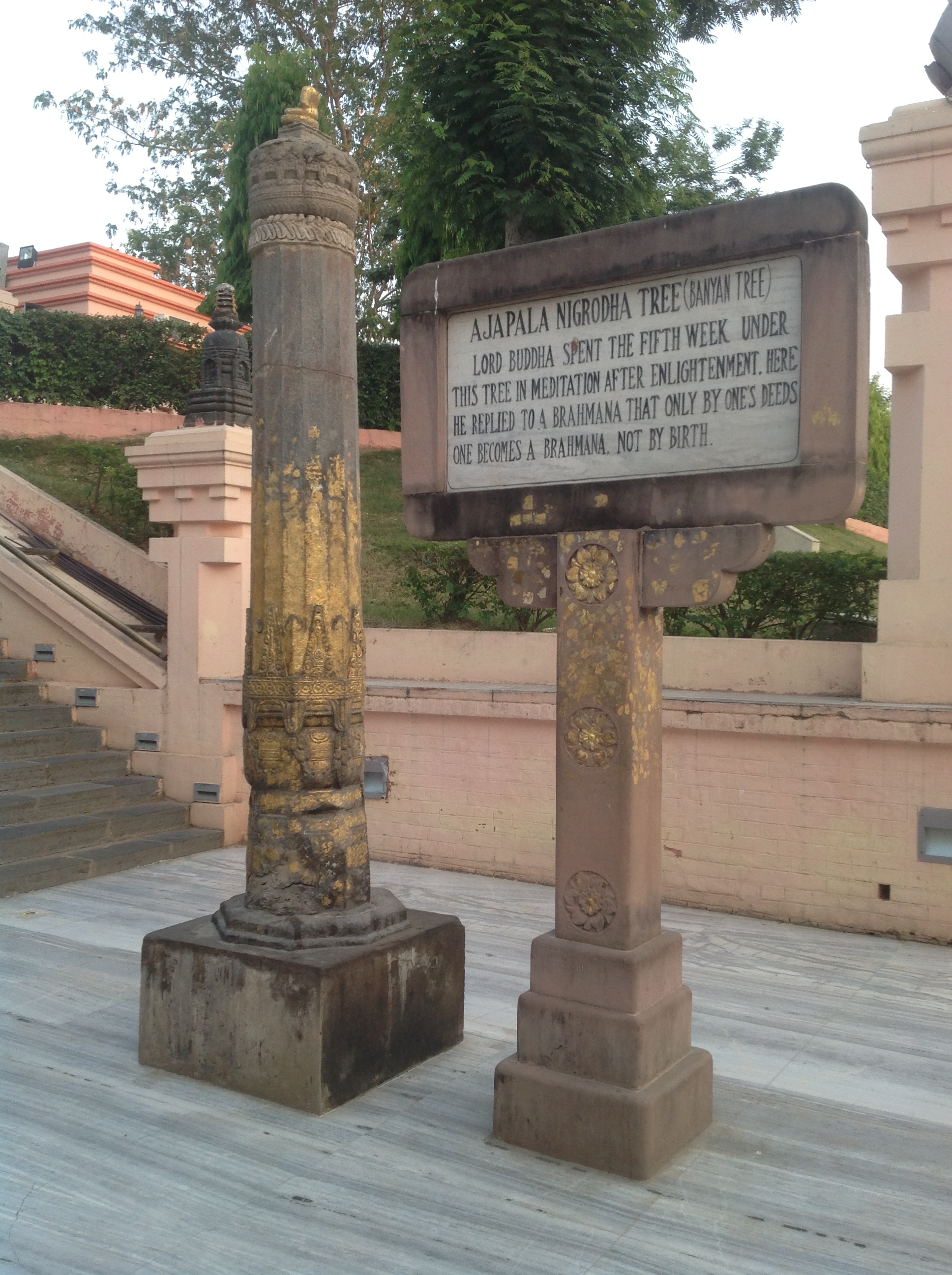
(5) Stayed under Ajapala Nigodh tree
Izzapala Pillar
(6) near the Lotus pond
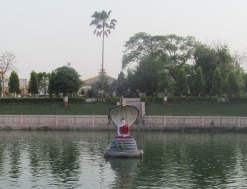
???????????????????????????????
(7) under Rajyatna tree. 
Rajratna Tree
MAHABODHI MAHAVIHARA (MAIN TEMPLE)
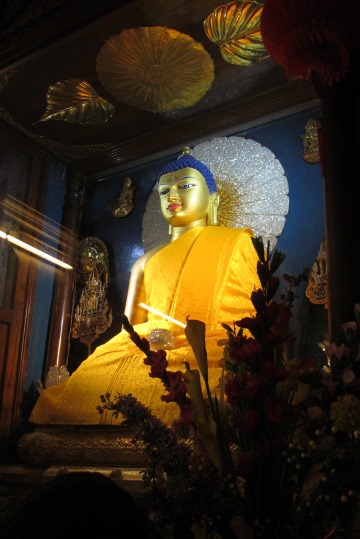
in 250 BCE Emperor Asoka visited Bodh Gaya to establish a monastery and shrine on the diamond throne (Vajrasana) to mark the exact spot of Lord Buddha’s enlightenment. A pyramidal structure perhaps built in about 2nd century A. D. (Kuṣāṇa period). The original structure was completed in 7th century A.D. during the reign of Gupta kings. It underwent several renovations in subsequent period in which the Burmese greatly contributed. Artistic décor are amazingly beautiful.Gold gilded Buddha statue seated in Bhumisparsa Mudra (Earth touching posture) in the sanctum shrine is made of Black stone built by Pala kings of Bengal (8 to 12th A.D.)
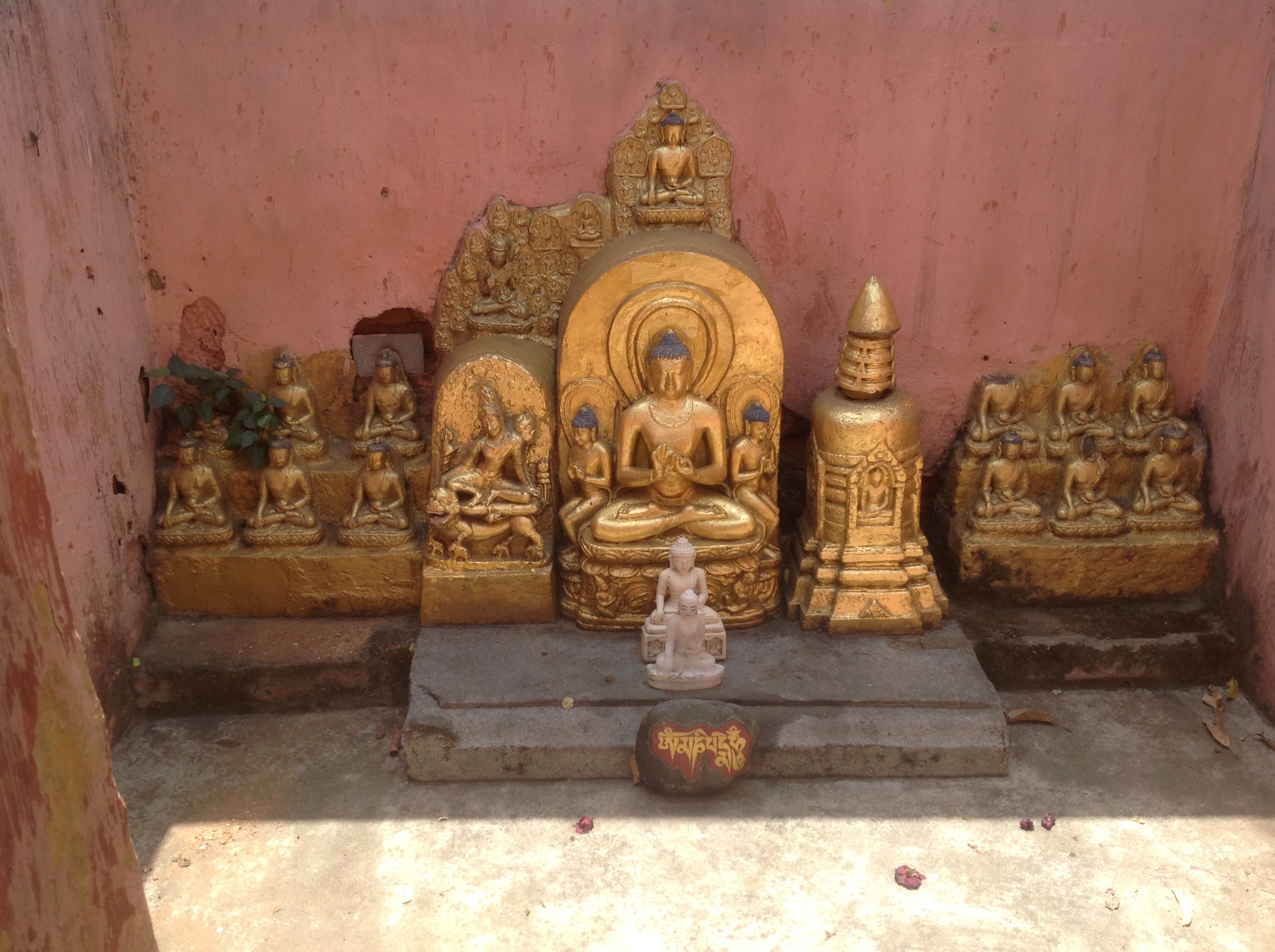
Lord Buddha inside the main temple ???????????????????????????????
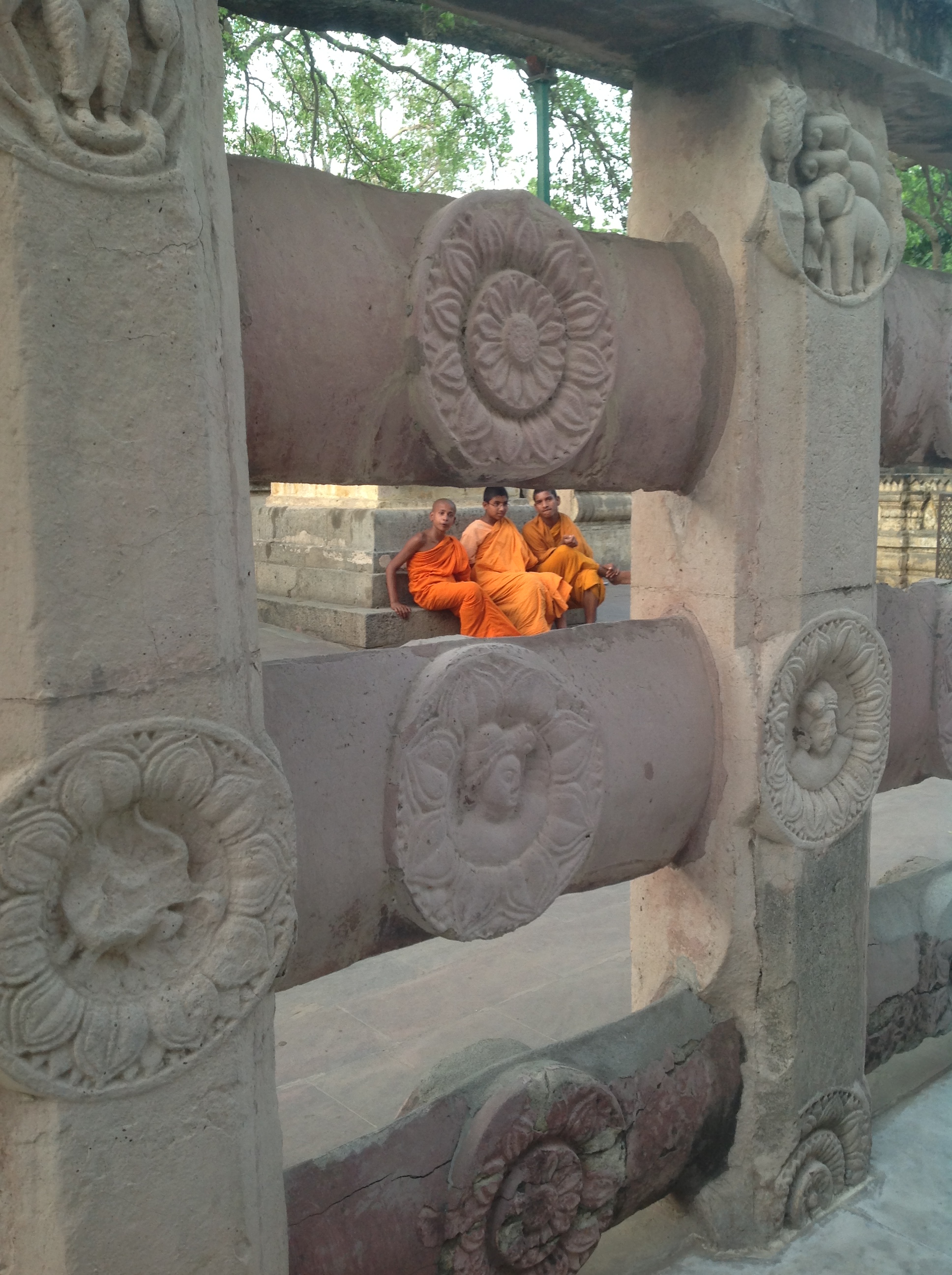
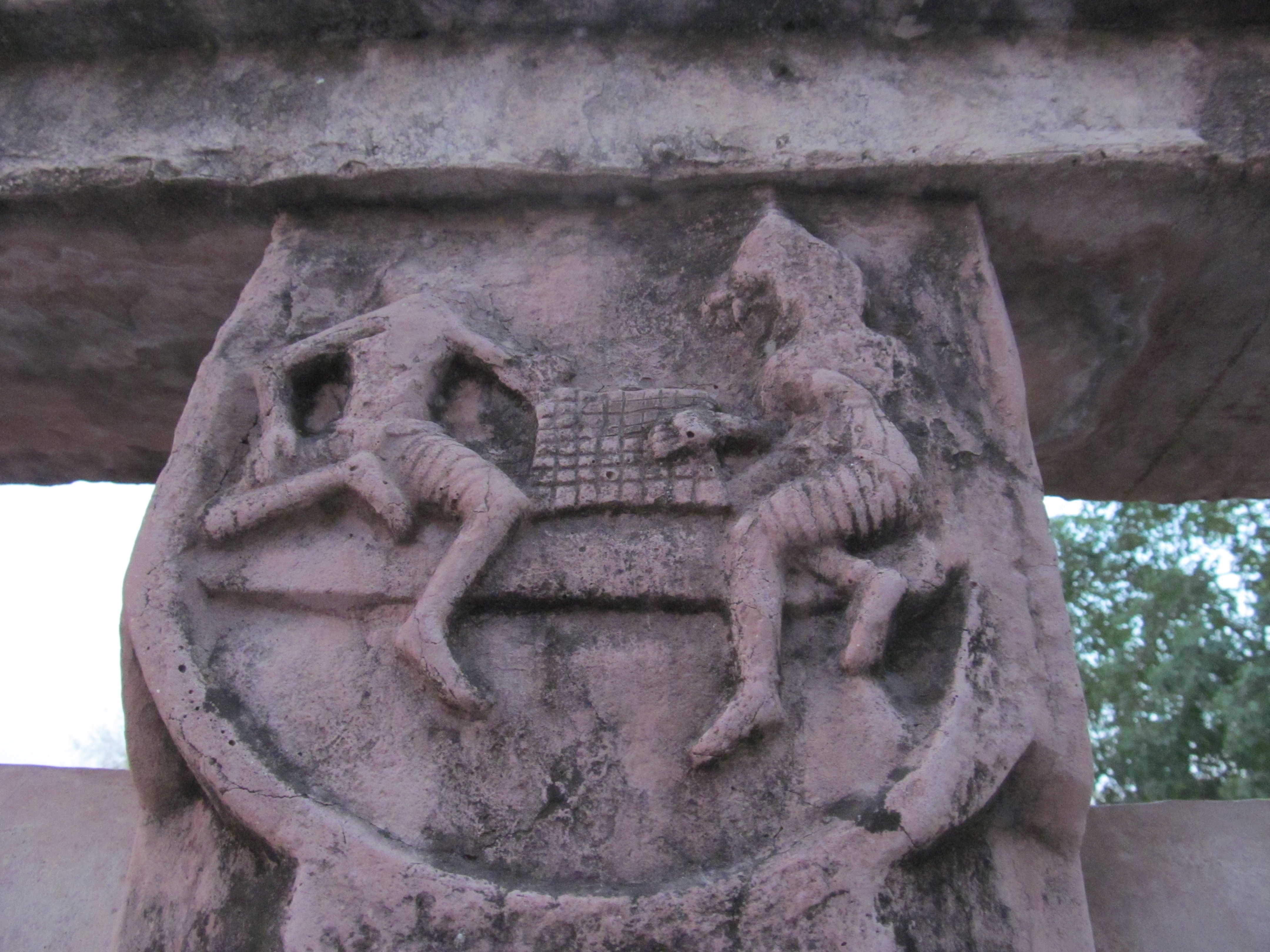
MAHABODHI MAHAVIHARA Temple is surrounded on all four sides by stone railings, about 2 meters high made of sandstone and coarse granite during 2nd to 1st century BC, and the 7th century AD respectively. It’s pillars, cross-bars, and copings are decorated with Jataka scenes, Buddha’s life events, Demi-deities figures, zodiac signs, historical and folks scenes, flora and fauna. Some inscriptions of Brahmi recorded the names of donors.
Railing with Decor 1 Railing Decor 2 Railing Decor 3 Railing with Decor
MAHABODHI TREE AND DIAMOND THRONE
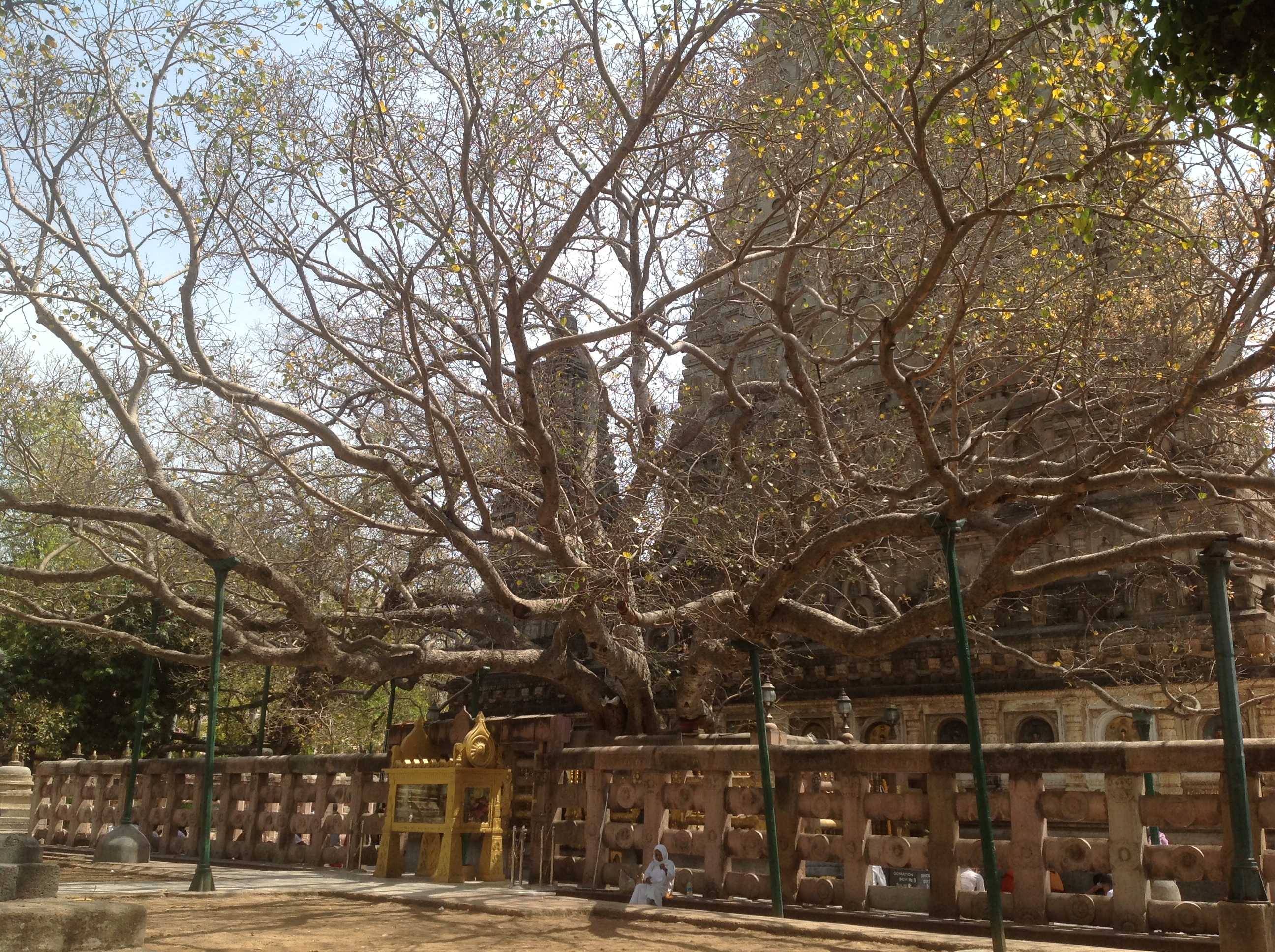
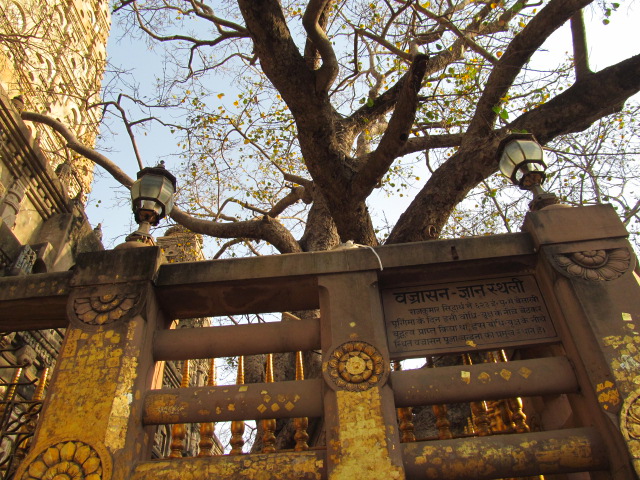
Under the sacred Peepal tree (Ficus Religiosa ) Bodhisattva Siddhartha Gautama sitting for meditation with a strong determination (Adhitthâna) that unless and until find out the truth he would not get up. All efforts of Mara the Evil One and his horrible forces failed in vain to disturb Siddhartha Gautama who finally attained Enlightenment on the full Moon day of Vaisakh Purnima (May).
Lord Buddha spent first week in meditation after attaining Enlightenment here.
Vajrasana or the Diamond Throne is the seat of the Buddha’s Enlightenment, made of red sand stone in the 3rd century B.C. by Emperor Asoka. This is the Prime Axis or Navel of the Earth, since all the past Buddhas attained Enlightenment and the future Buddhas too will attain the enlightenment here.
Present Bodhi tree is probably the 5th succession of the original tree which was earlier destroyed several times by man-made misery and natural calamities.
Mahabodhi Tree Mahabodhi 1
Vijrasana

MAHABODHI TEMPLE COMPLEX
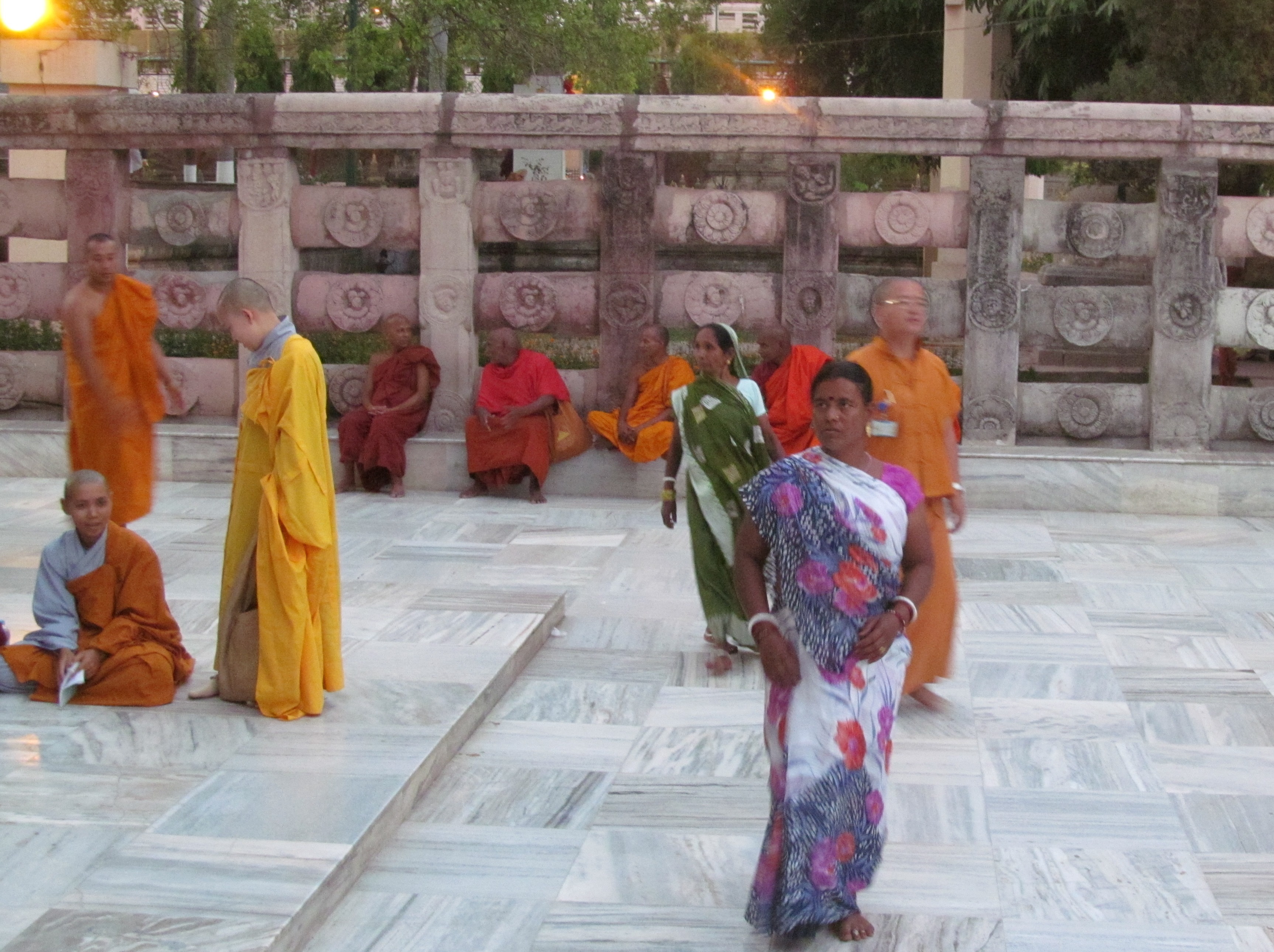
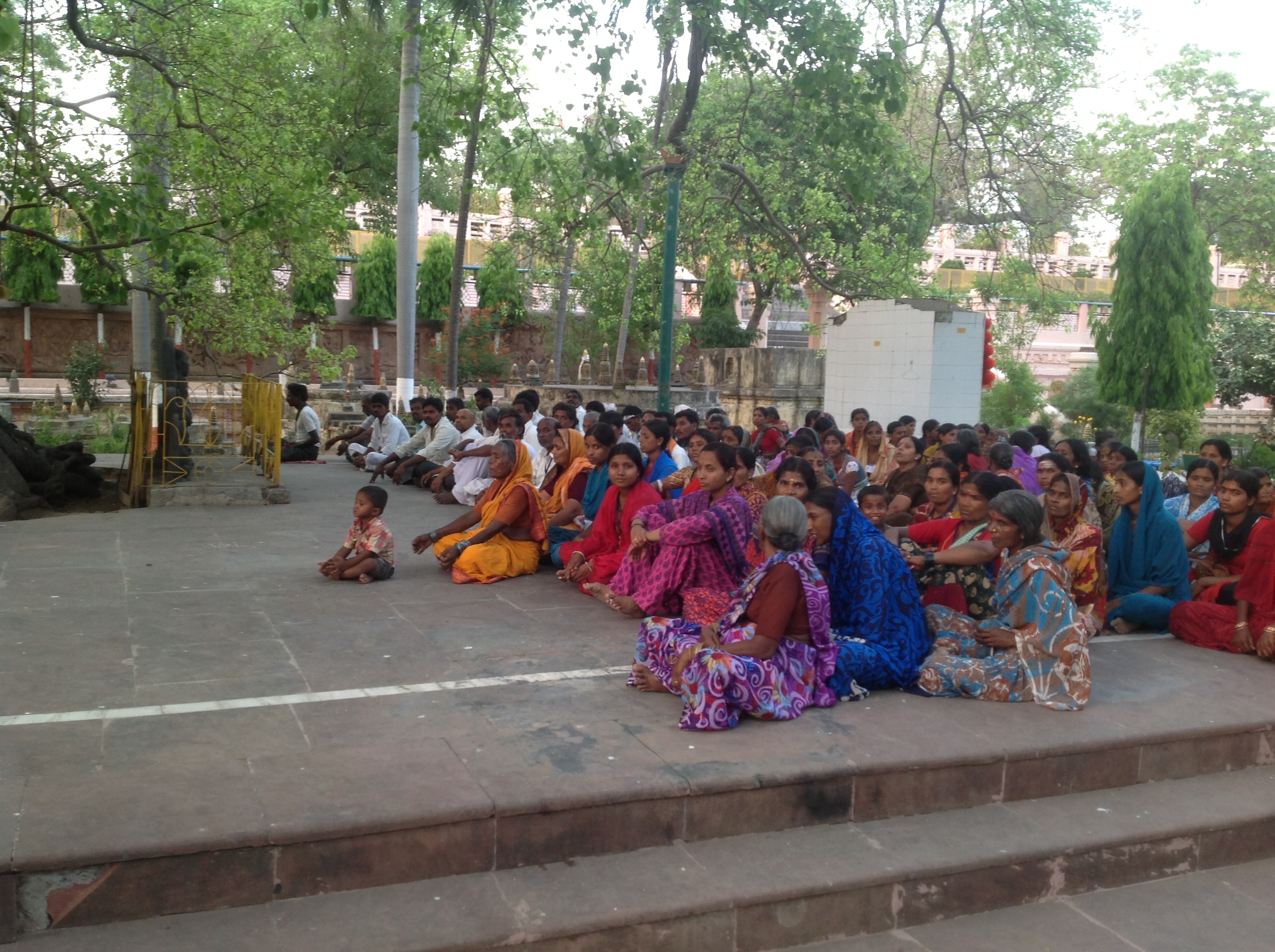
Different faces, different colours, different languages from different places come here with only one reason and same intension.
Paying homage to this holy place! To find some peace!

??????????????????????????????? Different Colours 4 Different Colours 5 Different Colours 9310

PRAYERS

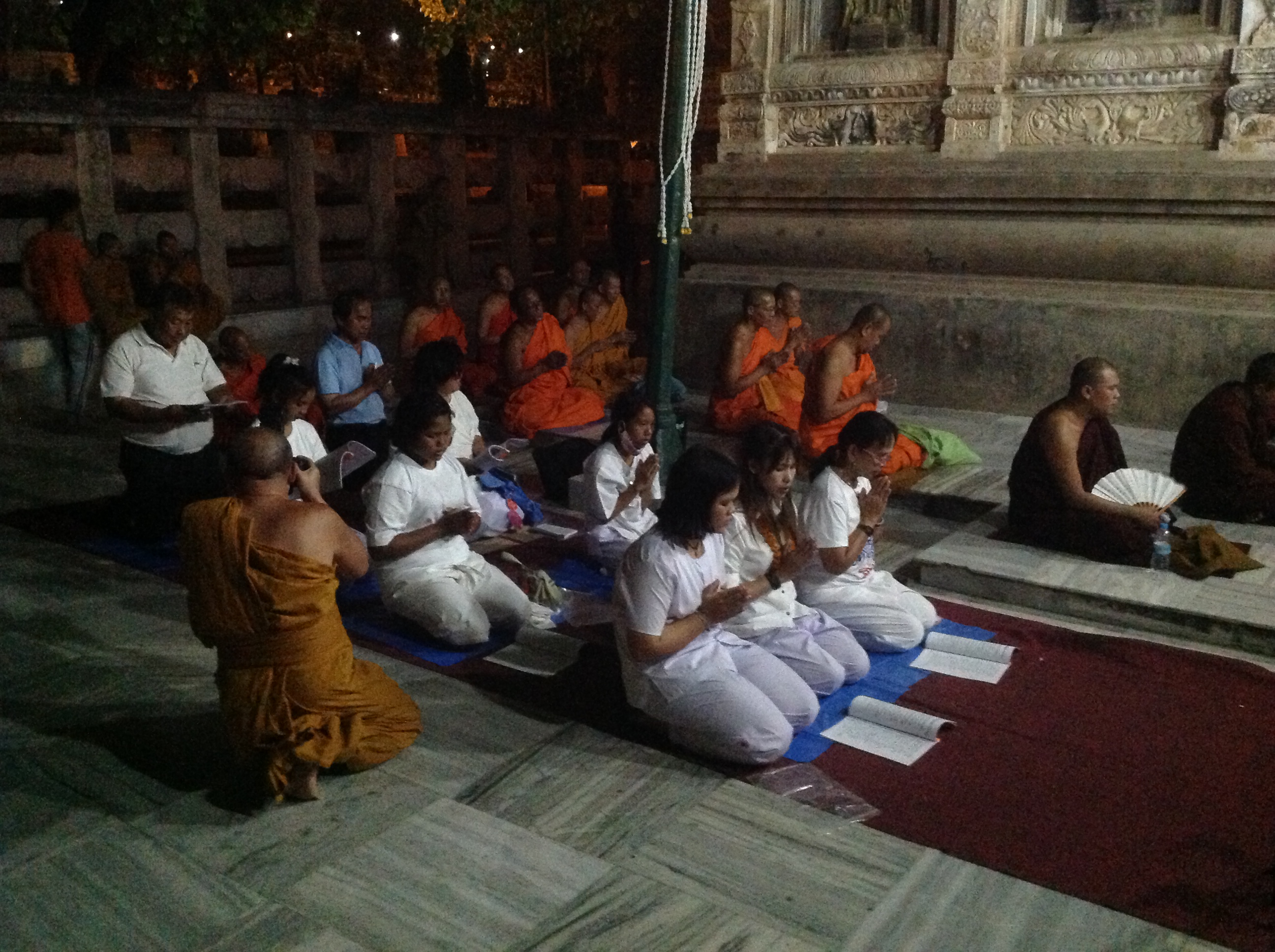
I had been stayed alone in Bodhgaya for 15 days. Visit total 21 times to Mahabodhi Temple Complex, morning, daytime, evening and night. Whole environment is well preserved and maintained as a peaceful, tranquil green garden. Can worship, recite, pray and meditate as you prefer

Mahabodhi Tree 1

AN ANCIENT TREE AND IT’S LEAVES
I sit from day to day
Under the shade of an ancient tree with great legacies.

As the season comes
Numerous birds with various colours
Among the branches
Chirping happily and enjoying the fruits.
When a breeze whoosh
Old yellow red leaves fallen like raindrops.
Since the folks take sacred to those leaves
Each passer-by carried away them
To keep as precious mementos.

Suddenly at one day
There are no more old foliage shedding down
I look up and see that all the ramified boughs stripped unclad.

All at once
The tree attired with new shoots and fresh orange-green petals
A white bird come and perched on a branch!

All have to wait a whole year to shed old leaves,
which are today’s new.

April 11th 2014 at Bodhgaya

Arche

ARCHEOLOGICAL MUSEUM OF BODHGAYA

At the entrance veranda of the museum there is a colossal image of standing Buddha in Abhayamudra, which is not allowed to take photograph.

Museum consists of two galleries and an open courtyard as well as two verandas.

First gallery exhibits sculptures including standing Yakshi figure having elaborate coiffure, crowned Buddha in Bhumisparsamudra, Maiterya, images of Buddha in different attitude, standing image of Manjusri, terracotta plaque depicting Buddha in Bhumisparshmudra, copper antimony rod, miniature pot, etc.

In second gallery are exhibited sculptures associated with Buddhist and Brahmanical faith.

Courtyard of the museum contains railing pillars, cross bars and coping stones which were shifted from Mahabodhi temple premises to the museum.

Peaceful meditation centre UruwelaThrill of Uruwela (2) View of Uruwela  ?????????? Thrill of Uruwela (1)

URUWELA CAVE

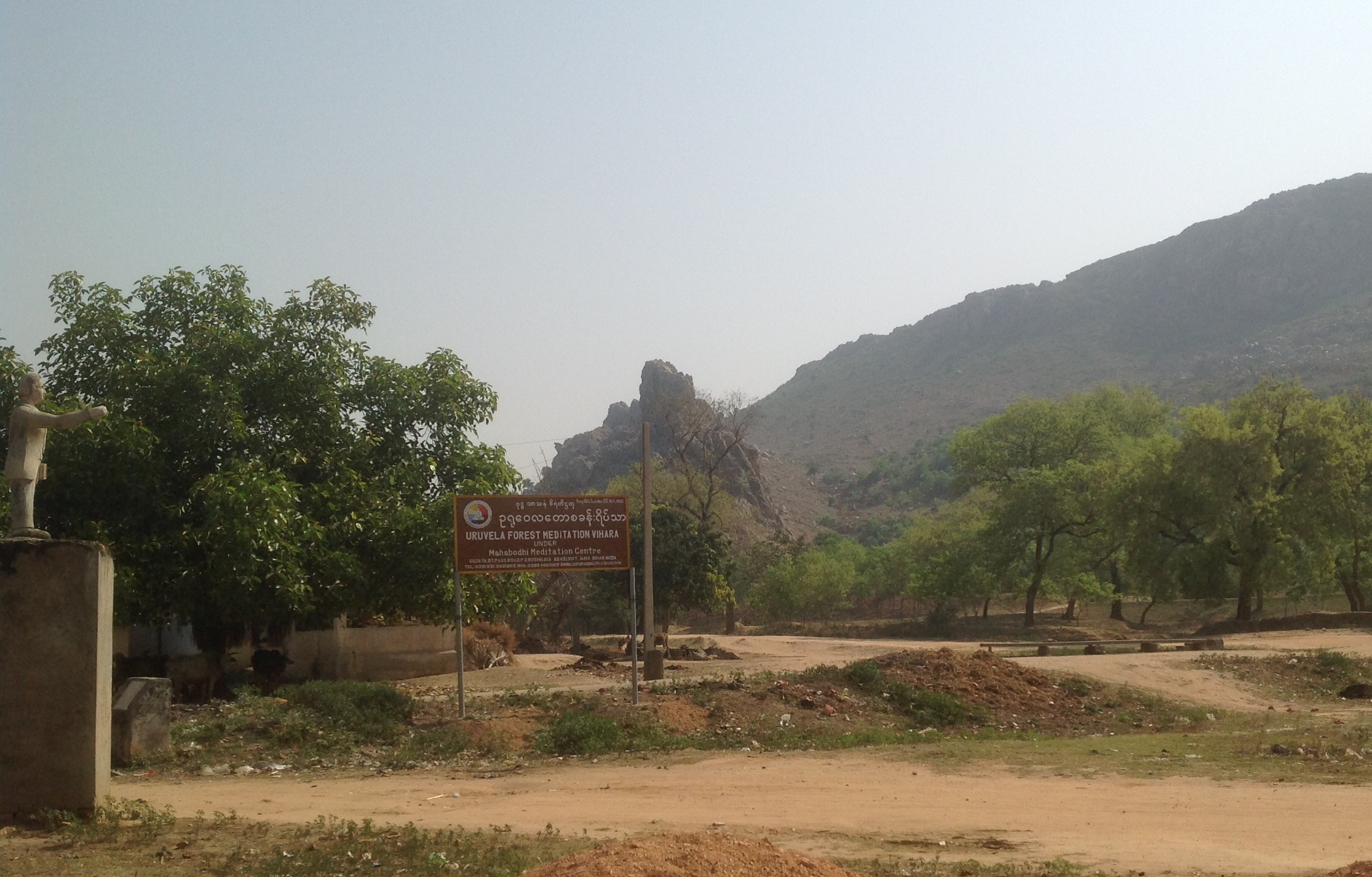
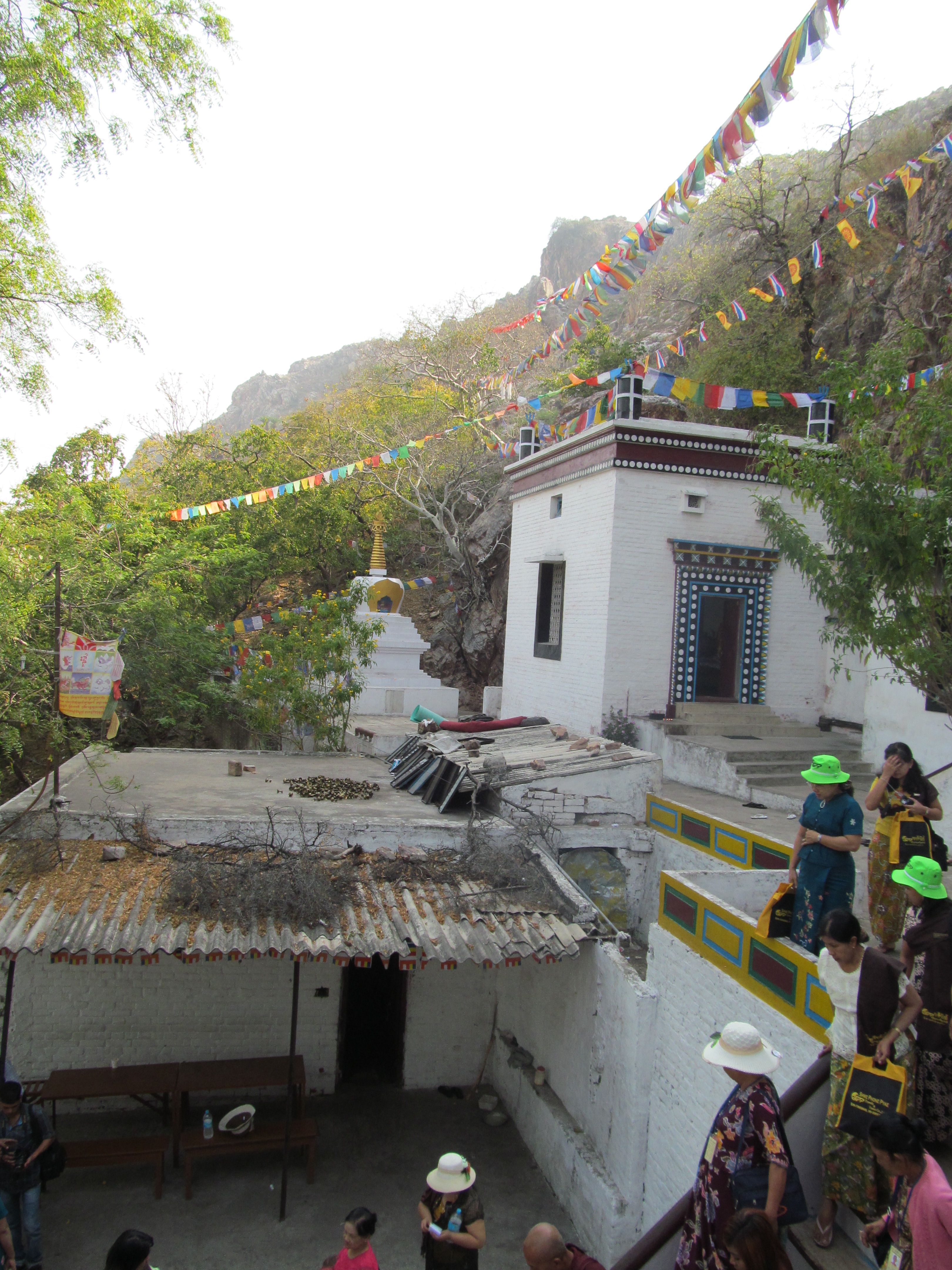
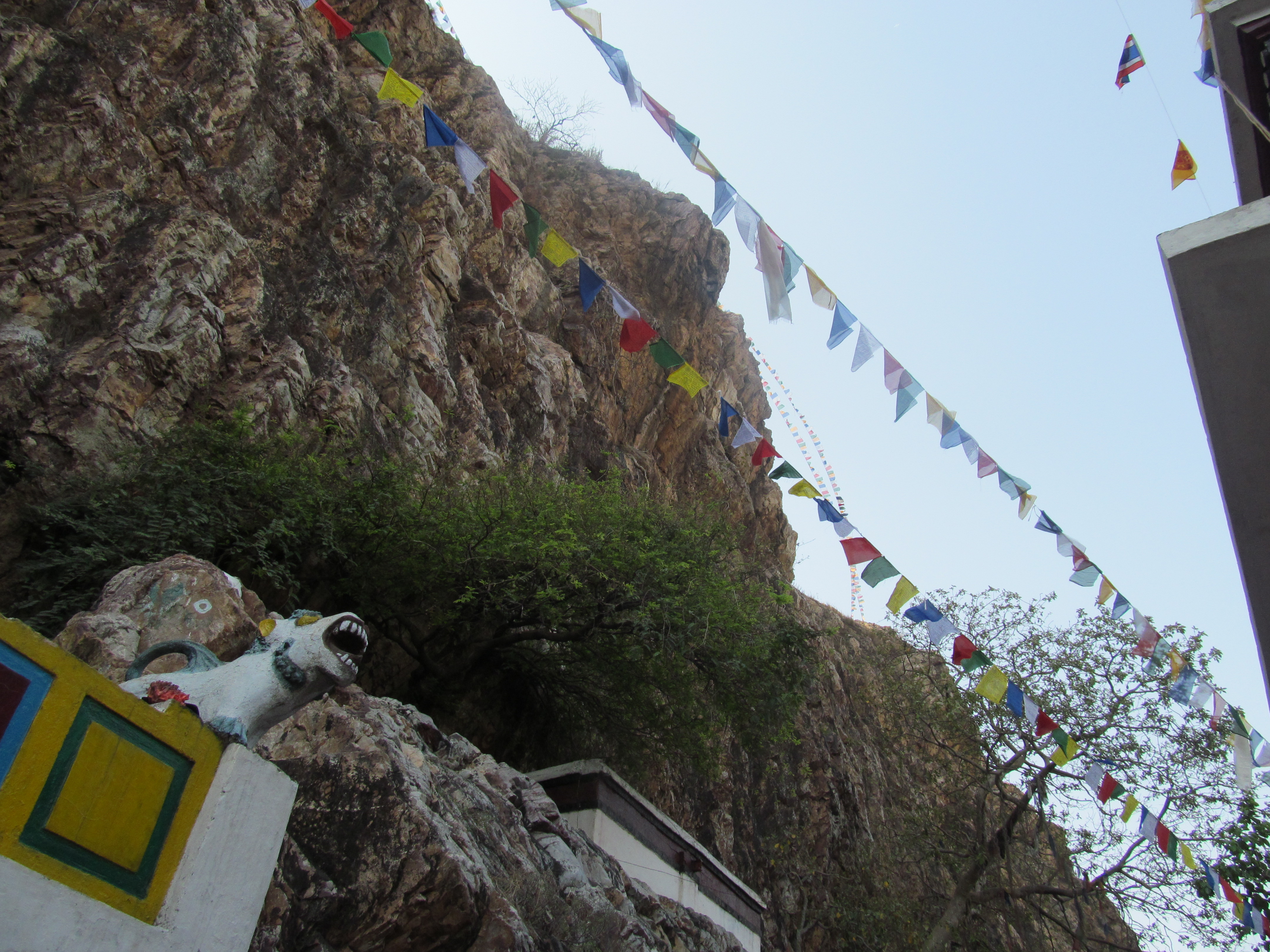
11 Km to South from Gaya city near Neranjara river, Dhurgeshwari (Uruwela) Cave, hidden high on a hilltop in the forest. Here the Lord Buddha when as Ascetic Gautama Siddhartha, exercised utmost pain and suffering on his body in search for the absolute truth for six years.

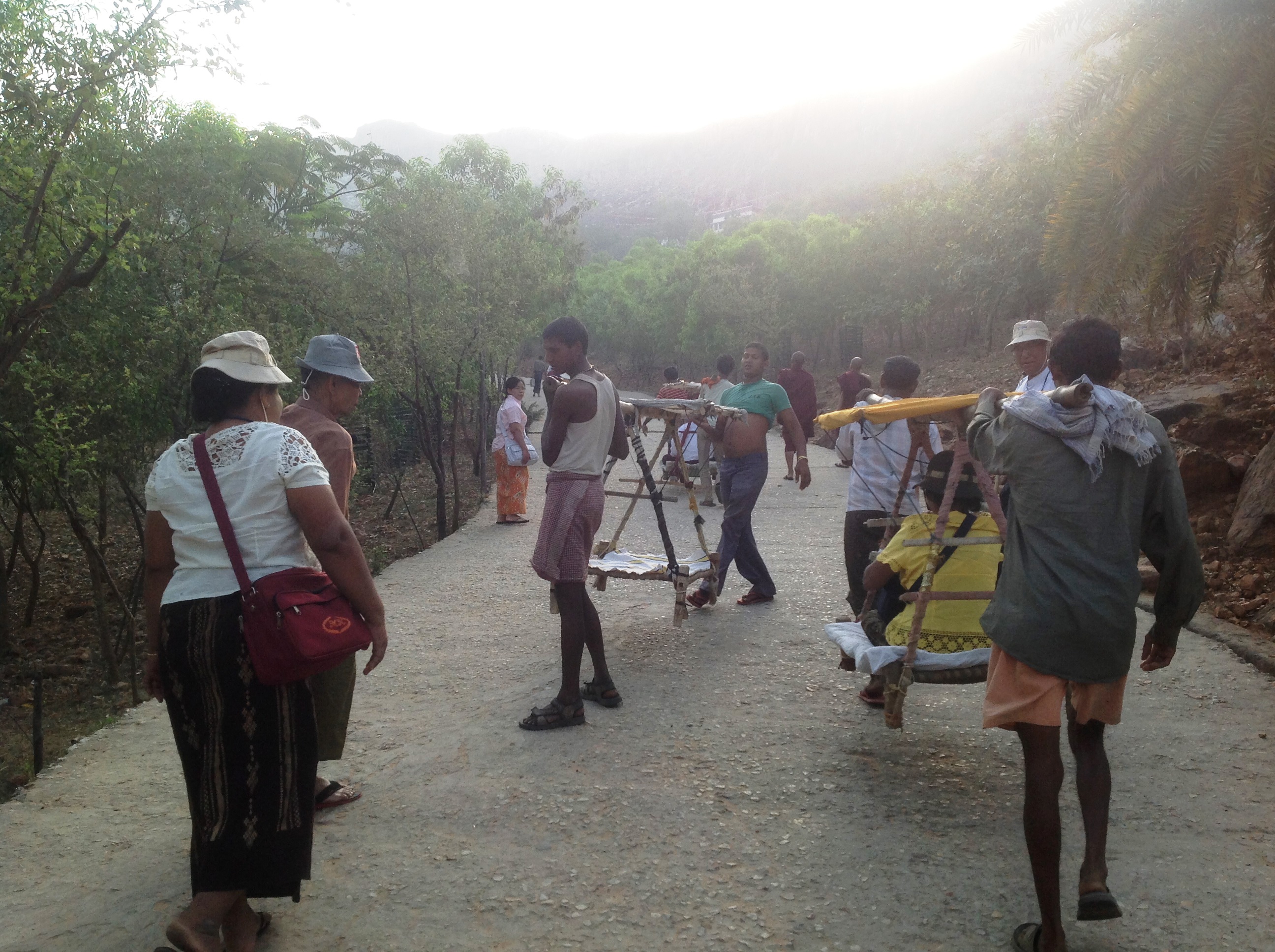
There was some awakening feeling during my uphill hike to the Cave.

Creeping in through the small entrance into the narrow dark cave, there’s a golden statue of the Buddha in his state of utmost torment. Lamps were lit, giving the cave a glow added to the thrilling sense, that here once our Lord, effort a lots to reach his destination.

Outside, all can delight with the enchanting panoramic views of the surroundings

HUMBLE OTHERWISE IMPORTANT SUPPORTERS

After practicing 6 years of self-torturing and body sufferings, one day Bodhisattva Gautama Siddhartha heard a harmonic sound of a harp, played by music deity Panchashankar, and realized that strings will be cut off when tightened too much and sound cannot create when too much loosened. So that extremism cannot take him to truth.

Left Uruwela, Gautama Siddhartha met Sujata, eldest daughter of the chief herdsman Nanda from a village of Sena near the banks of river Niranjana. Sujata offered milk rice porridge with golden bowl to Gautama Siddhartha which he took and became strengthened.

Sujata temple 2 Sujata temple

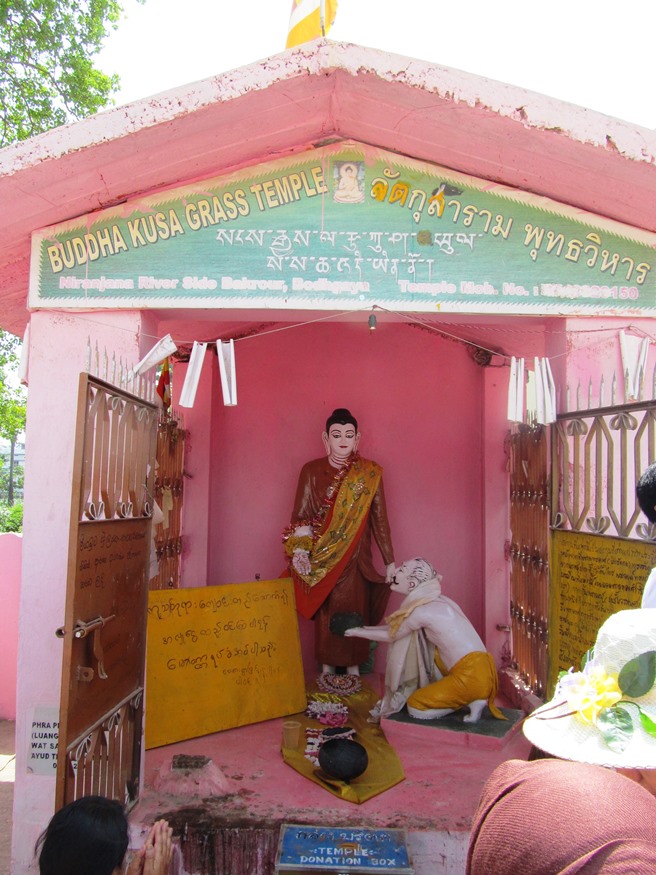
On the way forward, a humble grass-reaper bestowed 8 handfuls of Kusa Grass, which our Lord scattered underneath the Mahabodhi tree and it became a diamond throne, where our Lord meditated and finally enlightened.

River Niranjana is dried up in summer season as we can see.
A Stupa, Sujata’s Kuti was built to mark the place, once where her House was existed.
Small temples put up each in the places, where the contribution rice-milk porridge and Kusa grass offered.

372

??????????????????????????????? Kusa Grass

MULTICULTURALISM OF BUDDHISM IN BODHGAYA

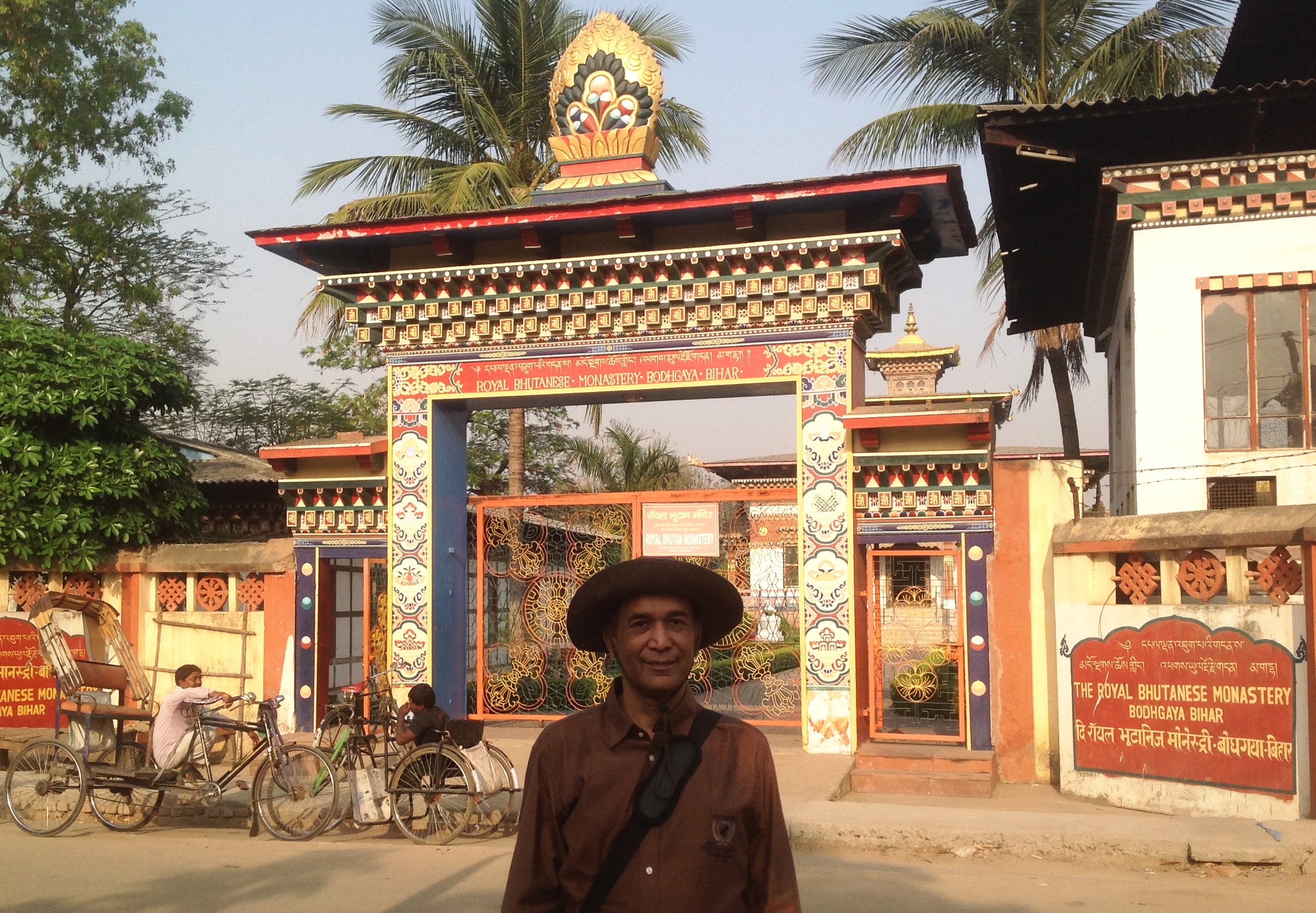
There are several Buddhist temples and monasteries of the different regions by the different people from worldwide, such as of Myanmar (at least 4), Sri Lanka, Thailand, Tibet, Bangladesh, Nepal, Sikkim, Bhutan, China, Japan, Taiwan, Vietnam, etc. in a wide area around the Mahabodhi Temple.

Some of which has existed there for more than hundreds of years.

??????????????????????????????? Darjeeling Stupa  ??????????????????????????????? Thailand Vihara Bangladesh Buddhist Monastery

Royal Bhutan Monastery Gate

These buildings, statues, temples, monasteries, landscaping and gardens, architectural styles, exterior and interior decorations reflected the culture of respective countries.

Min Done Min 1 Mindon Min 2 Mindon Min Zayat Min Done Min 2

MINDON MIN ZAYAT

King Mindon (1808-1878) of Myanmar sent a mission to Bodhgaya in 1874, through the Government of British India to make a very thorough renovation of the Mahabodhi Temple and the Compound, which in that time was in the hand of Hindu Shaivite Giri Mahant. Since 1891, the Sri Lankan Buddhist leader Anagarika Dharmapala started a campaign to return control of the temple to Buddhists, get success in 1949, when management was passed from the Hindu mahant to the Bihar State Government, which established a temple management committee.

Mindon Min also donate a Zayat (public rest house) near Narinjara River for Myanmar pilgrims in that time. Unfortunately, at present it is in the possession of Mahant.